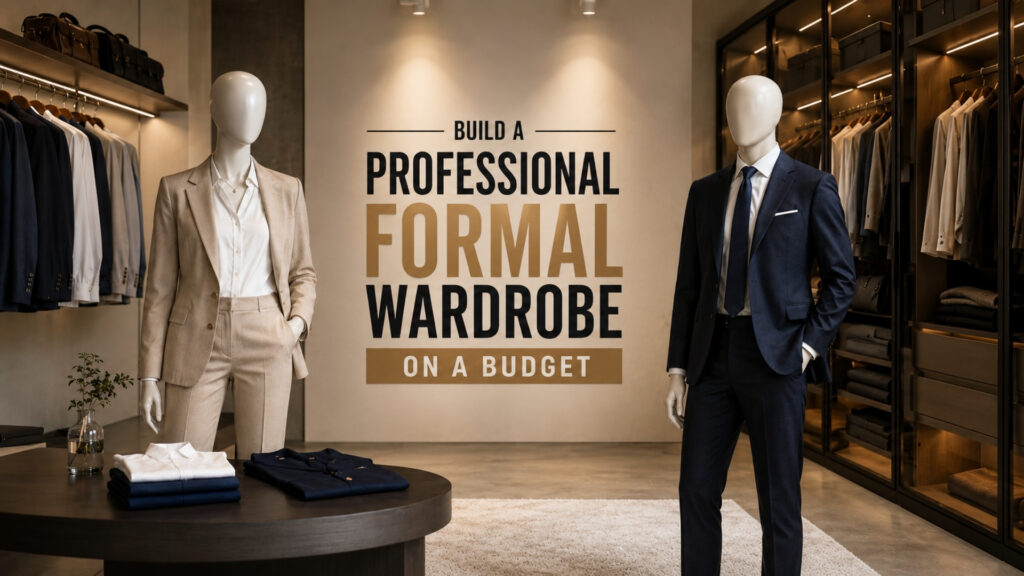
Investing a lot of money in a wardrobe while you are still learning all of that can feel premature. The good news, a strong formal wear collection doesn’t need a big budget or a closet full of clothes. It needs a handful of pieces that work together, fit well, and hold up over time.
This blog breaks down how to build formal wear for men and formal wear for women, piece by piece, without overspending.
What Makes a Good Formal Wear Wardrobe?
- Professional appearance: Clothes that look intentional, not thrown together.
- Versatility: Pieces that mix and match across multiple outfits.
- Comfort: You should be able to sit through a full workday without adjusting your clothes.
- Fit: The single biggest factor in whether an outfit looks expensive or cheap.
- Longevity: Pieces that last several seasons instead of one trend cycle.
Set a Budget Before You Start Shopping

- Prioritise essentials first. Shirts, trousers, and a blazer come before accessories.
- Set a per-item cap so one purchase doesn’t eat half your budget.
- Avoid impulse purchases, especially during sales when everything looks urgent.
- Leave room in the budget for one or two additions later in the season.
A clear budget turns wardrobe building from a guessing game into a plan.
Formal Wear Essentials for Men
Formal wear for men starts with a small set of shirts, trousers, and one good blazer. From there, the combinations multiply fast.
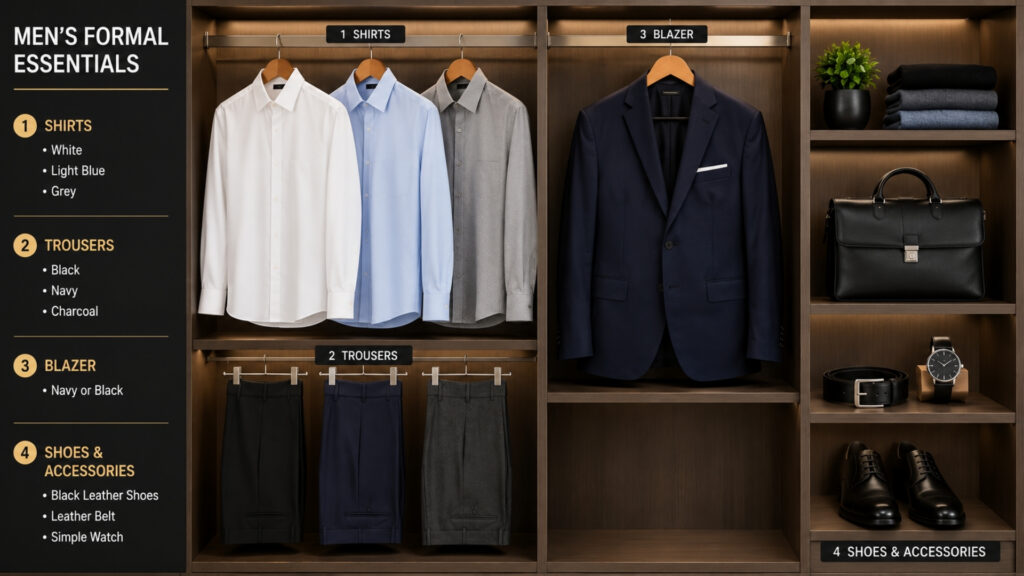
1. Shirts
Buy shirts in these three colours first.
- White
- Light blue
- Grey
These three pair with almost every trouser colour and every blazer, which means three shirts can carry an entire week of outfits.
2. Trousers
Stick to neutral, low-maintenance colours.
- Black
- Navy
- Charcoal
Each pair should work with every shirt on your list. That’s the test before you buy. Can this pair of trousers go with at least three shirts I own?
3. Blazer
One blazer, in navy or black, does more work than any other single item in a formal wardrobe. It turns a shirt-and-trouser combination into a complete, meeting-ready outfit in seconds.
4. Shoes and Accessories
- Black leather shoes, one pair, well-maintained, outlast three cheap pairs.
- A leather belt matches your shoes.
- A simple watch.
Three shirts, three trousers, one blazer, and one pair of shoes already give you more than a dozen outfit combinations.
Formal Wear for Women That Works for Every Office
Formal wear for women follows the same logic. Fewer pieces, more combinations, built around neutral colours.
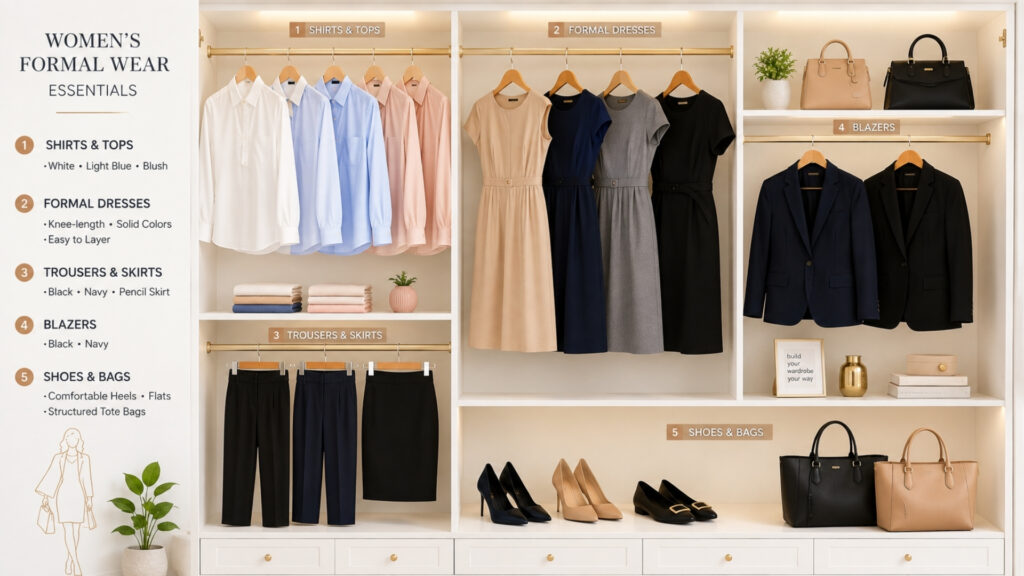
1. Shirts and Tops
Start with two or three solid-coloured shirts and tops in white, light blue, or blush. Solid colours pair more easily with trousers, skirts, and blazers than prints do.
2. Formal Dresses for Women Office Wear
A well-chosen formal dress can replace a full shirt-and-trouser outfit on busy mornings.
- Pick solid colours over prints for easier layering.
- Choose knee-length cuts for office settings.
- Prioritise comfortable fabric you can sit in for eight hours.
- Layer with a blazer for meetings, and remove it for a more relaxed look.
One or two formal dresses for women’s office wear can cover several days without repeating a look.
3. Trousers and Skirts
Black and navy trousers, plus one pencil skirt, round out the bottom half of the wardrobe. Straight-cut trousers work with the widest range of tops.
4. Blazers
One structured blazer in black or navy does the same job here as it does for men’s formal wear. It upgrades any base outfit for client meetings or presentations.
5. Shoes and Bags
Pick shoes you can walk in for a full day, not just sit in. A single structured bag in black or tan carries laptops, documents, and daily essentials without clashing with any outfit.
Choose Colours That Match Everything
Build the wardrobe around a small colour palette.
- Black
- White
- Navy
- Grey
- Beige
- Light Blue
Neutral colours reduce the number of clothes you need, because nearly every piece pairs with every other piece. A wardrobe built on five bright, unrelated colours needs far more items to look put together.
Focus on Quality Instead of Quantity
- Fabric Durability: Natural fibers like cotton generally outlast synthetic blends.
- Stitching: Loose threads or uneven seams signal a short lifespan.
- Fit: A well-fitted mid-range piece looks better than a loose expensive one.
- Cost per Wear: Divide the price by many times you will realistically wear it.
Build More Outfits with Fewer Clothes
The real skill in formal dressing isn’t owning more clothes, it’s combining fewer clothes in more ways.
- Mix and match shirts and trousers across different combinations.
- Repeat the blazer across multiple outfits, nobody tracks how often you wear it.
- Change accessories, a different belt, watch, or bag reset the look.
- Rotate shoes to extend the life of each pair.
Smart Shopping Tips to Save Money
- Shop end-of-season sales for formal basics, not trend pieces.
- Check outlet stores for the same brands at lower prices.
- Stack online discounts and cashback offers on planned purchases.
- Stick to trend-driven pieces that look dated within a year.
Buy with a list in hand. Sales convince you to buy what’s discounted, not what you need.
Take Care of Your Formal Wear
A well-maintained wardrobe stretches your budget further than any sale does.
- Follow washing instructions on the label. Formal fabrics often need cooler washes
- Iron shirts and trousers before wearing, not the night before an emergency
- Clean and polish shoes regularly to prevent cracking
- Hang blazers on proper hangers instead of folding them
- Store formal wear in a dry space to prevent fabric damage
Building a Wardrobe That Grows with You
A professional wardrobe grows over time it doesn’t need to arrive fully formed on day one. Start with the essentials: a few shirts, two or three trousers, one blazer, and one reliable pair of shoes. Add pieces gradually as your budget and your sense of what works for you both grow. Prioritise fit and fabric quality over labels, and you’ll build a formal wear collection that earns its place in your closet for years, not months.