
In your home, no other floor works as hard as your kitchen. It bears the brunt of oil splashes, turmeric marks, dropped heavy pots, and steam from daily water spills. Also, your family passes through the rush to grab breakfast, cook festive dishes, and get in late at night from dishing out the tea. What looks perfect in a display room disintegrates under this use. Choose a durable material to stand up to kitchen activity first, then think about design.
This guide includes 10 types of kitchen floors used in Indian homes, for each of which we present the pros, cons, what that surface does well in a kitchen, and what it is meant for.
This guide includes 10 types of kitchen floors used in Indian homes, for each of which we present the pros, cons, what that surface does well in a kitchen, and what it is meant for.
Best 10 Kitchen Flooring Ideas for Indian Homes
Indian kitchens go through a lot every day, like oil splatters, steam from cooking, heavy use, and dampness during monsoon. Not every floor can handle that. These 10 flooring options can, and here is where each one works well and where it doesn’t.
1. Porcelain Tiles: The Best Flooring for a Kitchen in India
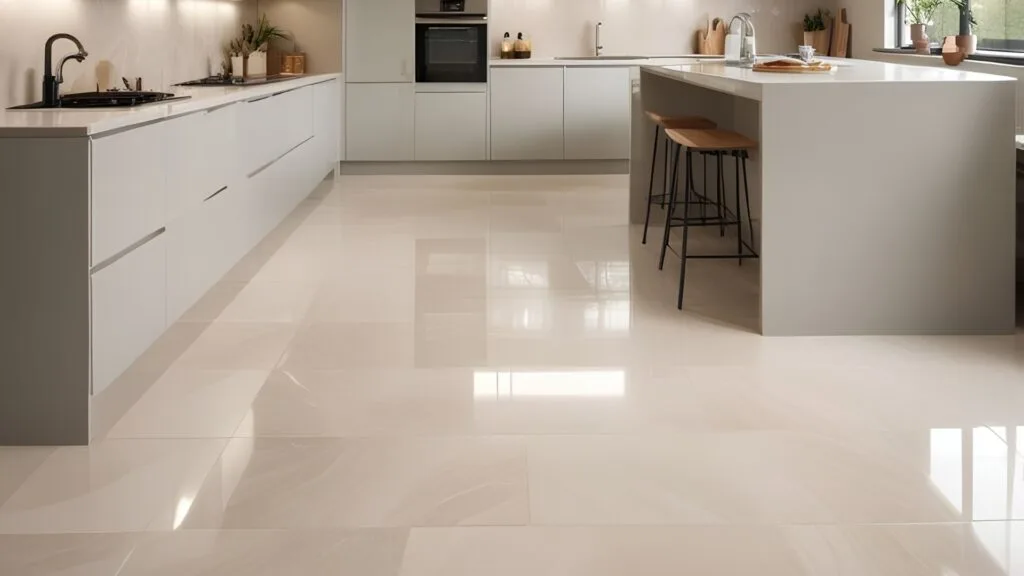
Porcelain is the safest choice for an Indian kitchen. It does not absorb water, oil, or stains. You can clean it in seconds with just a wet cloth. You also get hundreds of kitchen floor tile designs that look like wood, marble, or stone, so you get the style without the hard work of maintaining it.
If you use big tiles, you will have fewer grout lines. Fewer grout lines mean fewer places for dirt and oil to collect. And dark coloured grout hides turmeric stains much better than white grout.
Best for: Homes where cooking happens daily and heavily.
Trade-off: It is hard and feels cold under your feet. If you drop a glass, it will break. Shiny tiles become slippery when wet, so always choose matte or anti-skid kitchen tiles.
If you use big tiles, you will have fewer grout lines. Fewer grout lines mean fewer places for dirt and oil to collect. And dark coloured grout hides turmeric stains much better than white grout.
Best for: Homes where cooking happens daily and heavily.
Trade-off: It is hard and feels cold under your feet. If you drop a glass, it will break. Shiny tiles become slippery when wet, so always choose matte or anti-skid kitchen tiles.
Must Explore: 5 Budget-friendly Home Decor Ideas for a Designer Look
2. Hardwood Flooring
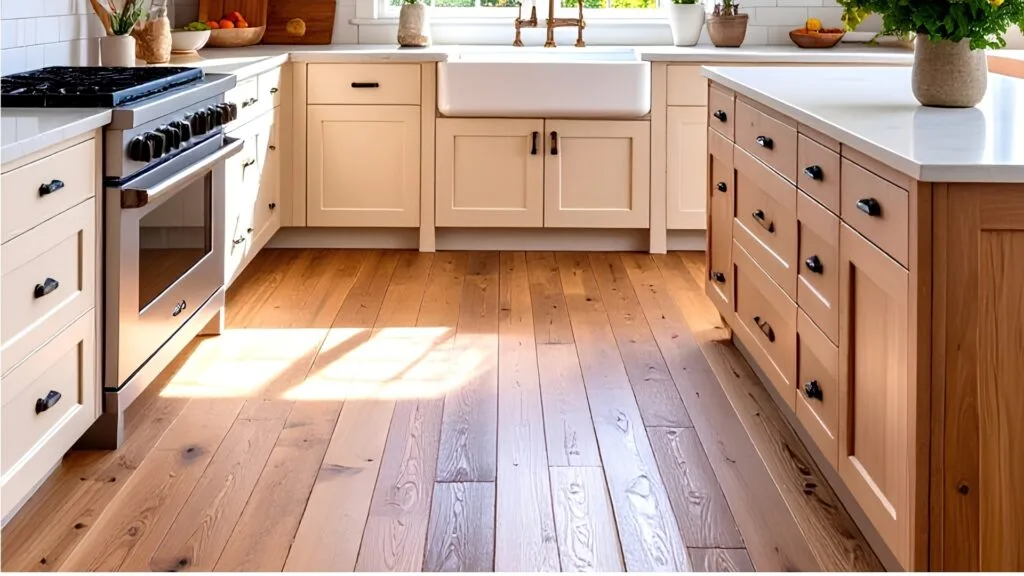
Real wood makes a kitchen look rich and warm and also increases the resale value of the home. Engineered wood is better than solid wood because it handles monsoon moisture better.
Water is the big problem for wood. Spills near the sink can leave marks. In humid months, the boards can swell at the edges. You have to wipe any spill immediately. Keep a mat in front of the sink and stove to protect the floor where you walk the most.
Best for: Homes in dry weather and open kitchens that are connected to the living room.
Trade-off: It is costly and needs a lot of care. You will see scratches easily if many people walk on it.
Water is the big problem for wood. Spills near the sink can leave marks. In humid months, the boards can swell at the edges. You have to wipe any spill immediately. Keep a mat in front of the sink and stove to protect the floor where you walk the most.
Best for: Homes in dry weather and open kitchens that are connected to the living room.
Trade-off: It is costly and needs a lot of care. You will see scratches easily if many people walk on it.
3. Vinyl Flooring (LVT and LVP): Waterproof Kitchen Flooring
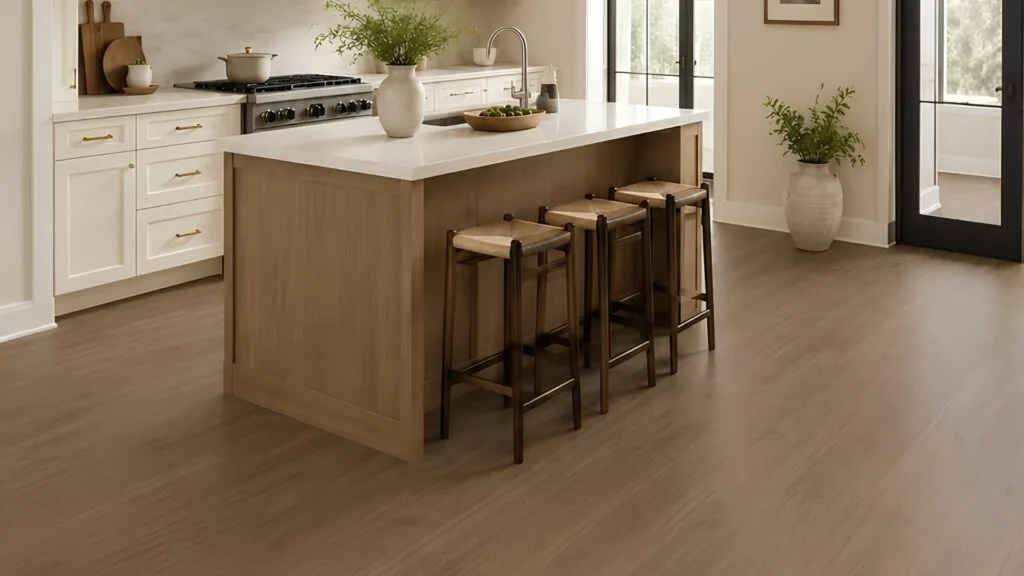
Luxury vinyl tiles and planks look very close to real wood and stone. They are fully waterproof and softer to stand on than tiles. This really helps when you stand at the kitchen counter for a long time.
It can be installed in a day or two if the base floor is level. Vinyl also reduces noise, so if you drop a spoon or utensil, it makes a dull sound, not a loud clang.
Best for: Rented homes and quick, low-cost kitchen makeovers.
Trade-off: Heavy fridge or washing machine legs can leave dents on it. A very hot pan can leave burn marks, so always use a trivet. Cheap vinyl also fades if direct sunlight falls on it daily.
It can be installed in a day or two if the base floor is level. Vinyl also reduces noise, so if you drop a spoon or utensil, it makes a dull sound, not a loud clang.
Best for: Rented homes and quick, low-cost kitchen makeovers.
Trade-off: Heavy fridge or washing machine legs can leave dents on it. A very hot pan can leave burn marks, so always use a trivet. Cheap vinyl also fades if direct sunlight falls on it daily.
4. Natural Stone: Granite, Marble, and Kota
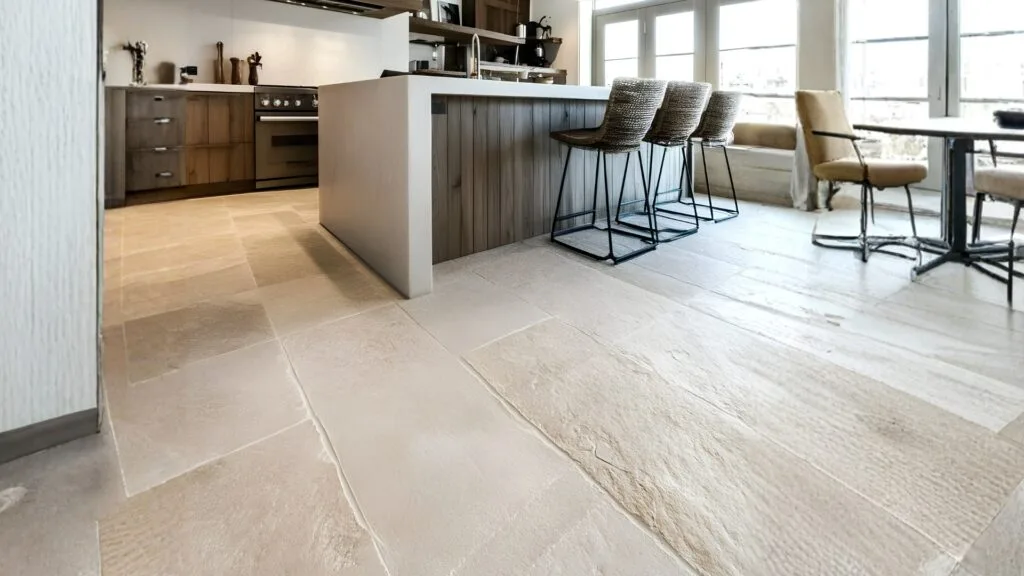
Granite, marble, and Kota stone each bring something different to a kitchen. Granite is a popular option for busy spaces, while Kota stone offers a simpler, understated finish. Marble has a more decorative appearance, but lemon juice and other acidic ingredients can dull or mark its surface.
Best for: Large kitchens where a grand look and long life come first.
Trade-off: High cost and yearly sealing. Stone stays cold in winter.
Best for: Large kitchens where a grand look and long life come first.
Trade-off: High cost and yearly sealing. Stone stays cold in winter.
5. Polished Concrete
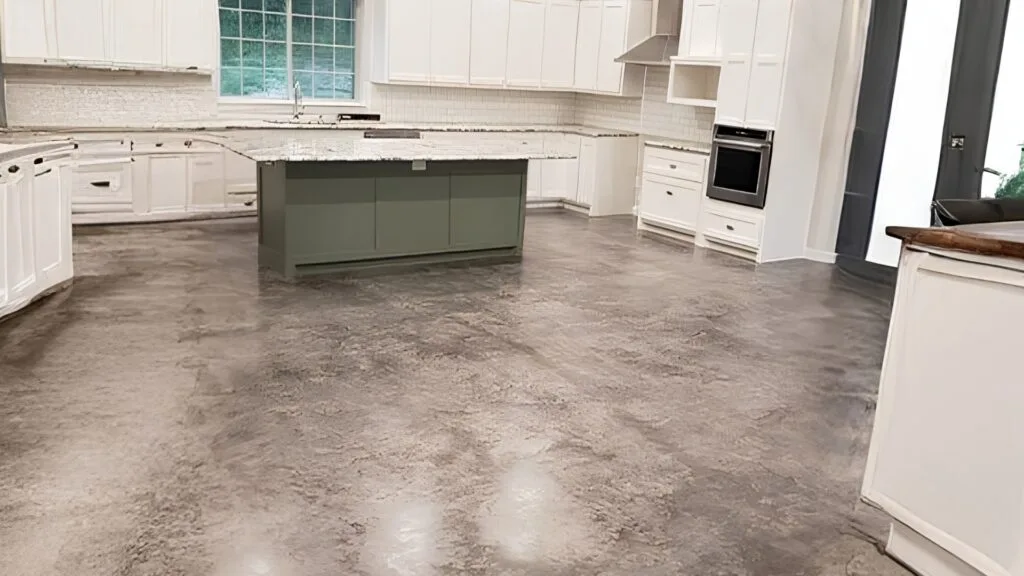
Concrete is perfect for modern and industrial-style kitchens. It lasts for decades. You can polish it to make it shiny or add colour to match your walls. Since it is one single surface, there are no grout lines where dirt can collect.
But the result depends fully on the worker’s skill. If polishing is done badly, the floor stays rough and dusty. So always see a finished kitchen done by the same person before you hire.
Best for: Simple, minimalist homes.
Trade-off: It is cold and hard to stand on. You can fix that by putting a rug near the stove. Some floors also get thin hairline cracks as the building settles.
But the result depends fully on the worker’s skill. If polishing is done badly, the floor stays rough and dusty. So always see a finished kitchen done by the same person before you hire.
Best for: Simple, minimalist homes.
Trade-off: It is cold and hard to stand on. You can fix that by putting a rug near the stove. Some floors also get thin hairline cracks as the building settles.
6. Laminate Flooring: Cheap Kitchen Flooring
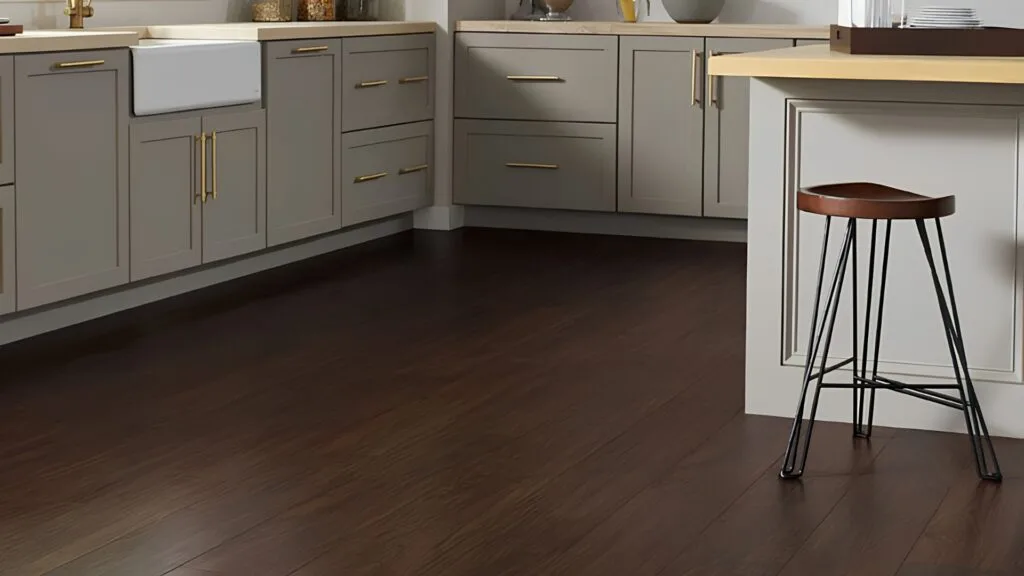
Laminate looks like wood and tiles but costs much less. It can be fitted in just a few hours. If you want it for the kitchen, buy only water-resistant boards. Normal laminate swells up when water gets inside the edges.
Seal the gaps along the walls and around the sink. That one step saves the boards from the most damage.
Best for: People on a tight budget who want fast installation.
Trade-off: Standing water will spoil it. And if it gets damaged, you have to replace the full plank.
Seal the gaps along the walls and around the sink. That one step saves the boards from the most damage.
Best for: People on a tight budget who want fast installation.
Trade-off: Standing water will spoil it. And if it gets damaged, you have to replace the full plank.
7. Cork Flooring
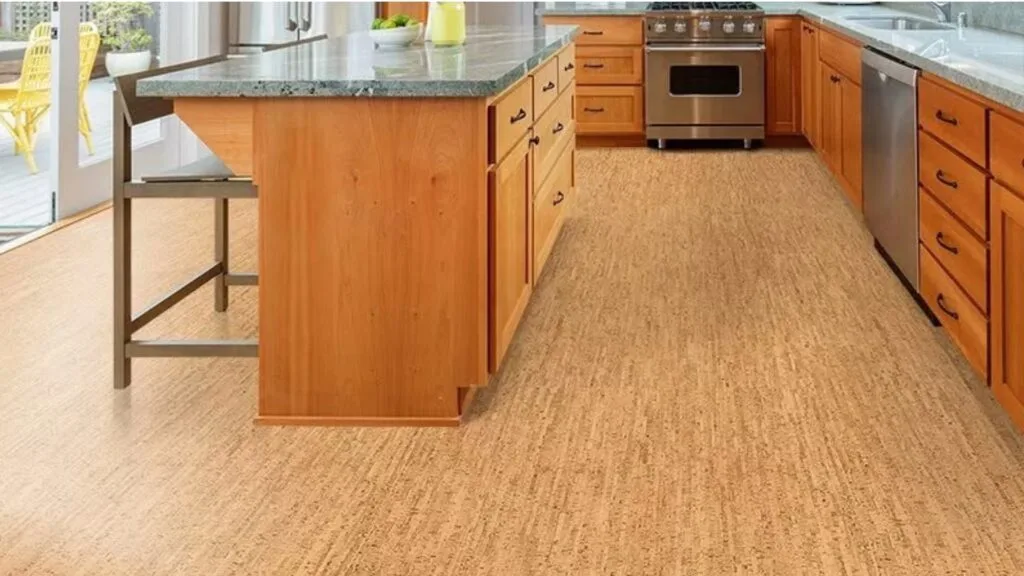
Cork is soft to walk on and is easy on your back. It helps a lot if you stand and cook for hours. It does not catch mold easily, and it is eco-friendly. It also feels warmer than tiles or stone in winter.
But strong direct sunlight can fade its colour. And for the kitchen, always choose a sealed finish, because raw cork soaks up oil.
Best for: People who cook for a long time and want an eco-friendly option.
Trade-off: Sharp things can scratch it. You need to reseal it every few years.
But strong direct sunlight can fade its colour. And for the kitchen, always choose a sealed finish, because raw cork soaks up oil.
Best for: People who cook for a long time and want an eco-friendly option.
Trade-off: Sharp things can scratch it. You need to reseal it every few years.
8. Patterned Cement Tiles
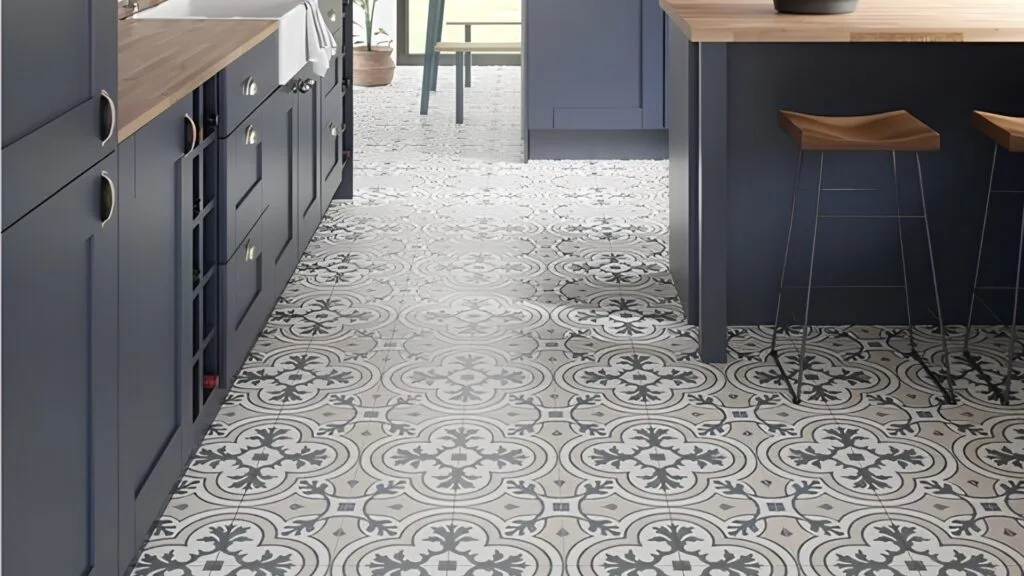
Bold, colourful tiles can make the floor the hero of your kitchen. Athangudi tiles from Tamil Nadu are a famous handmade Indian option. Each tile is slightly different from the other, which machine-made tiles don’t have.
If your floor is bold, keep your cabinets plain. A white or light grey cabinet lets a bold floor stand out.
Best for: Homes that love colours and handmade craft.
Trade-off: The surface is porous. You need to seal the tiles before grouting and then seal them again every year.
If your floor is bold, keep your cabinets plain. A white or light grey cabinet lets a bold floor stand out.
Best for: Homes that love colours and handmade craft.
Trade-off: The surface is porous. You need to seal the tiles before grouting and then seal them again every year.
9. Bamboo Flooring
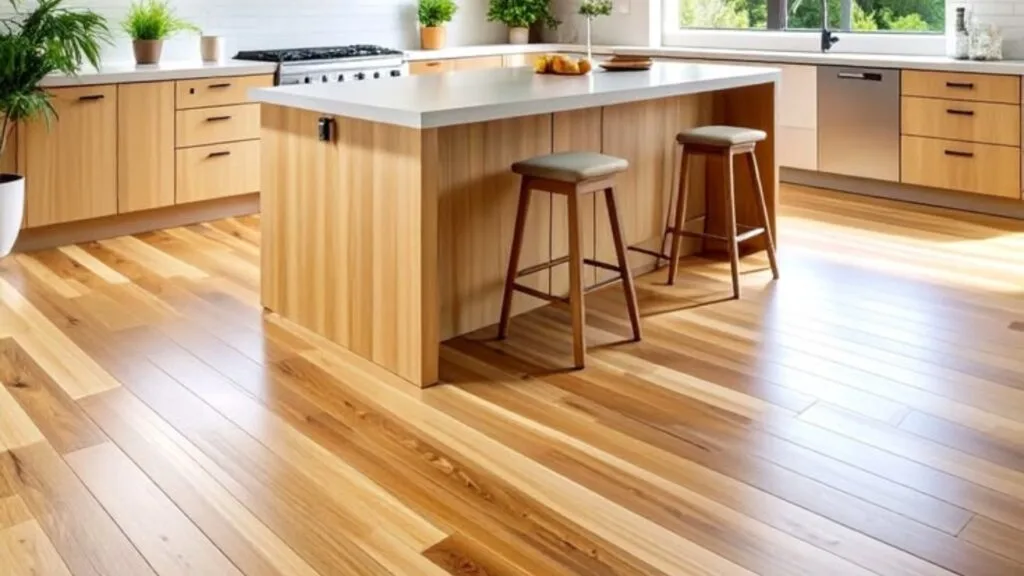
Bamboo looks like wood but grows back in just a few years, so it is eco-friendly. It is hard, light in colour, and makes a small kitchen look brighter. Strand-woven bamboo is much stronger and lasts much longer than normal bamboo.
But cheap bamboo scratches and warps very fast. Always buy from a trusted brand and ask for a written warranty.
Best for: Modern, eco-friendly kitchens.
Trade-off: Quality is very different from brand to brand. If water spills stay on it, it gets damaged.
Best for: Modern, eco-friendly kitchens.
Trade-off: Quality is very different from brand to brand. If water spills stay on it, it gets damaged.
10. Terracotta Tiles
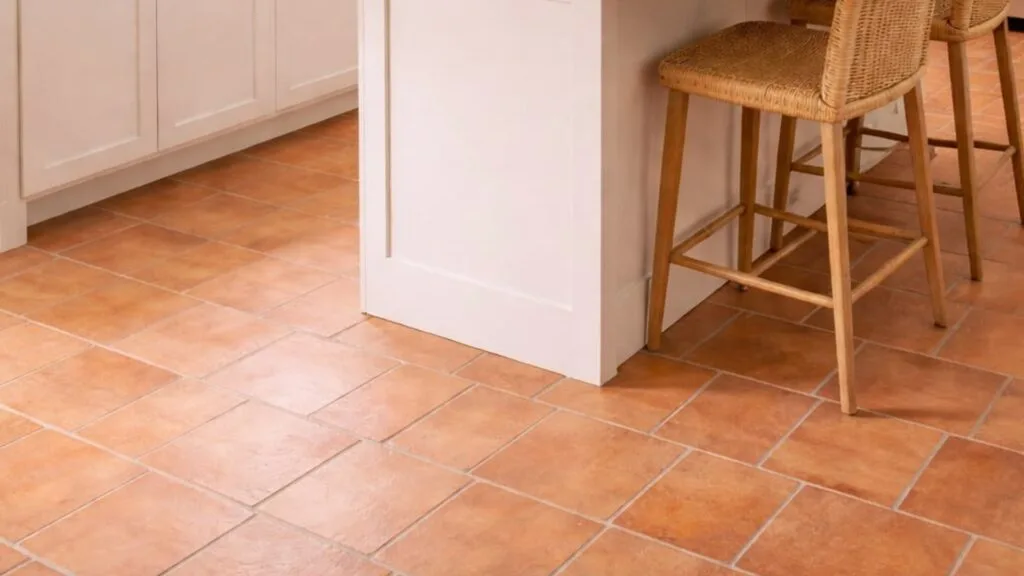
Terracotta gives a warm, earthy, sun-baked look. It suits village-style and Mediterranean-style kitchens. The colour becomes deeper with time, so the floor actually looks better every year.
But it is very porous, so it absorbs oil and stains quickly. You must seal it properly before you start using the kitchen. And you need to reseal it regularly.
Best for: Rustic and traditional-style homes.
Trade-off: It needs sealing and regular re-sealing. If it chips, the chipped spot looks like a light patch.
But it is very porous, so it absorbs oil and stains quickly. You must seal it properly before you start using the kitchen. And you need to reseal it regularly.
Best for: Rustic and traditional-style homes.
Trade-off: It needs sealing and regular re-sealing. If it chips, the chipped spot looks like a light patch.
What Are The Best Kitchen Flooring Materials for Small Kitchens
A small kitchen needs light, seamless floors. Light porcelain tiles and vinyl planks make the room look wider. Run planks along the longest wall to stretch the space.
Skip busy patterns in a tight kitchen. Pair a bold floor with plain walls, or keep the floor plain and let the cabinets speak.

What Are Some Common Kitchen Flooring Mistakes
Homeowners repeat the same few errors.
- Glossy tiles near the sink: Wet gloss means slips. Pick matte or anti-skid finishes.
- Skipping the sealing step: Stone, cement, and terracotta stain fast when unsealed.
- Ignoring the base: An uneven subfloor cracks tiles and lifts planks. Level it first.
- Picking by photo alone: Colours shift under your own kitchen light. Test a sample.
- Forgetting the dark-floor problem: Dark floors show dust and water spots. Light floors show turmeric.
Pick a Kitchen Floor That Survives Your Cooking
A good kitchen floor survives your daily cooking and fits your budget. The look comes second. Porcelain wins for ease. Stone wins for strength. Cement tiles win for craft.
Order two or three samples. Spill oil and tea on them. Then place them in your kitchen light and see which one still looks good after a day. That test saves you from a costly mistake.
Order two or three samples. Spill oil and tea on them. Then place them in your kitchen light and see which one still looks good after a day. That test saves you from a costly mistake.