
Table of Contents
Ever spent five minutes looking for your car keys in a house full of storage? That’s rarely a storage problem. It’s a planning problem.
A big home doesn’t guarantee an organised one. You can own a large wardrobe, extra cabinets, and rows of shelves, and still hunt for space for daily items. The problem isn’t furniture. It’s planning.
Good storage design fits into your home’s layout from the start. It keeps rooms clean, saves time, and puts every square foot to use. Here are storage solutions that work in real homes, not just show homes, plus the mistakes that quietly waste the space you already have.
A big home doesn’t guarantee an organised one. You can own a large wardrobe, extra cabinets, and rows of shelves, and still hunt for space for daily items. The problem isn’t furniture. It’s planning.
Good storage design fits into your home’s layout from the start. It keeps rooms clean, saves time, and puts every square foot to use. Here are storage solutions that work in real homes, not just show homes, plus the mistakes that quietly waste the space you already have.
How to Plan Home Storage the Right Way?
Most homeowners plan paint colours, furniture, and lighting first. Storage comes later, if at all. That’s why wardrobes overflow, kitchen counters pile up, and seasonal items end up stuffed in random corners.
Plan storage early, and every room performs better. You skip buying extra cabinets down the line, and your home stays organised without constant sorting. This matters more in apartments, where every room does double duty and there’s no spare closet to absorb overflow.
The fix isn’t buying more units. It’s mapping what you own, how often you use each item, and where your hands naturally reach for it during the day. That mapping decides what goes into a wardrobe, what goes on a wall, and what gets pushed into a loft or under a bed.
Plan storage early, and every room performs better. You skip buying extra cabinets down the line, and your home stays organised without constant sorting. This matters more in apartments, where every room does double duty and there’s no spare closet to absorb overflow.
The fix isn’t buying more units. It’s mapping what you own, how often you use each item, and where your hands naturally reach for it during the day. That mapping decides what goes into a wardrobe, what goes on a wall, and what gets pushed into a loft or under a bed.
Multi-Functional Furniture with Hidden Storage
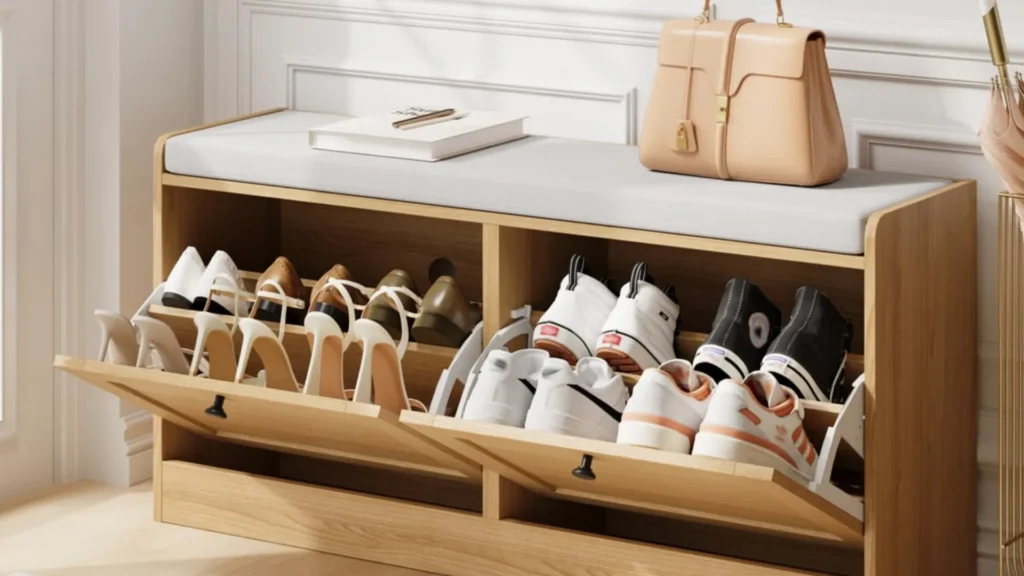
Some of the best storage stays out of sight. A storage bench at the entrance holds shoes and gives you a place to sit. An ottoman in the living room stores blankets and kids’ toys. A coffee table with a hidden compartment keeps remotes and chargers out of view in seconds.
None of these needs extra floor space. They make your existing furniture do more. If you’re planning a new home or renovation, modular furniture for modern homes offers even more ways to combine hidden storage with everyday functionality. Look for pieces with a lift-top lid, a false-bottom drawer, or a removable cushion base. A media console with two drop-down doors can hold cables, board games, and stacks of paperwork behind a clean front panel. Even a headboard with built-in shelves gives you a spot for books and chargers without touching your wardrobe space at all.
None of these needs extra floor space. They make your existing furniture do more. If you’re planning a new home or renovation, modular furniture for modern homes offers even more ways to combine hidden storage with everyday functionality. Look for pieces with a lift-top lid, a false-bottom drawer, or a removable cushion base. A media console with two drop-down doors can hold cables, board games, and stacks of paperwork behind a clean front panel. Even a headboard with built-in shelves gives you a spot for books and chargers without touching your wardrobe space at all.
Under-Bed Storage Ideas for Small Bedrooms
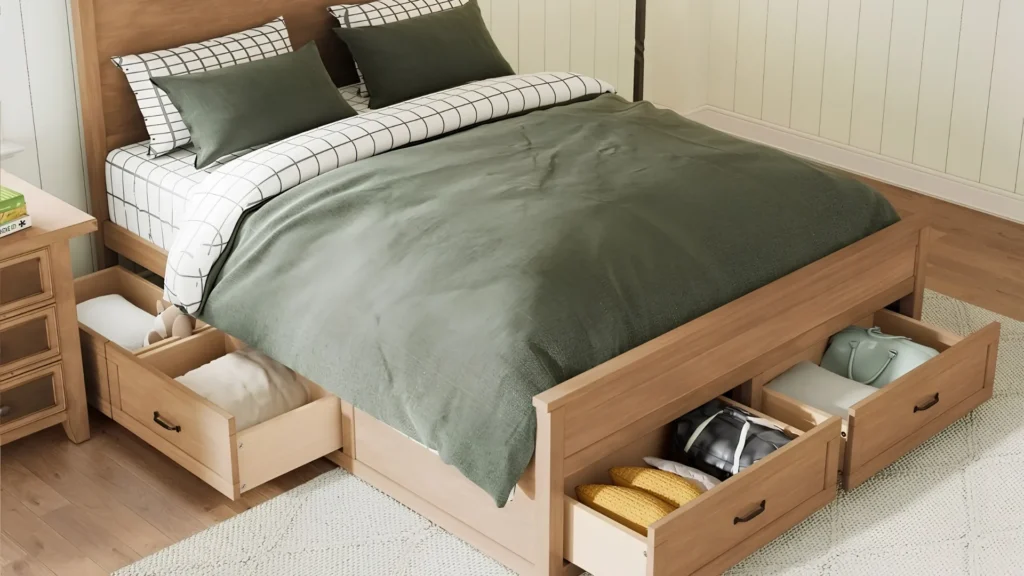
The area under the bed goes unused in most homes. Store items you don’t need daily here, like luggage, winter blankets, spare sheets, and festive decor. A hydraulic bed makes access simple. Pull-out drawers work well in kids’ rooms.
This frees up your wardrobe shelves for the items you reach for every day. If you’re buying new furniture, pick a hydraulic or drawer-style bed over a plain divan. The storage difference over five years is significant, and the cost gap is small.
Vacuum storage bags help here, too. Winter quilts and out-of-season clothes take up a fraction of the space once the air is pressed out, which means one under-bed drawer can hold what used to need two.
This frees up your wardrobe shelves for the items you reach for every day. If you’re buying new furniture, pick a hydraulic or drawer-style bed over a plain divan. The storage difference over five years is significant, and the cost gap is small.
Vacuum storage bags help here, too. Winter quilts and out-of-season clothes take up a fraction of the space once the air is pressed out, which means one under-bed drawer can hold what used to need two.
Modular Wardrobe Design for Everyday Use
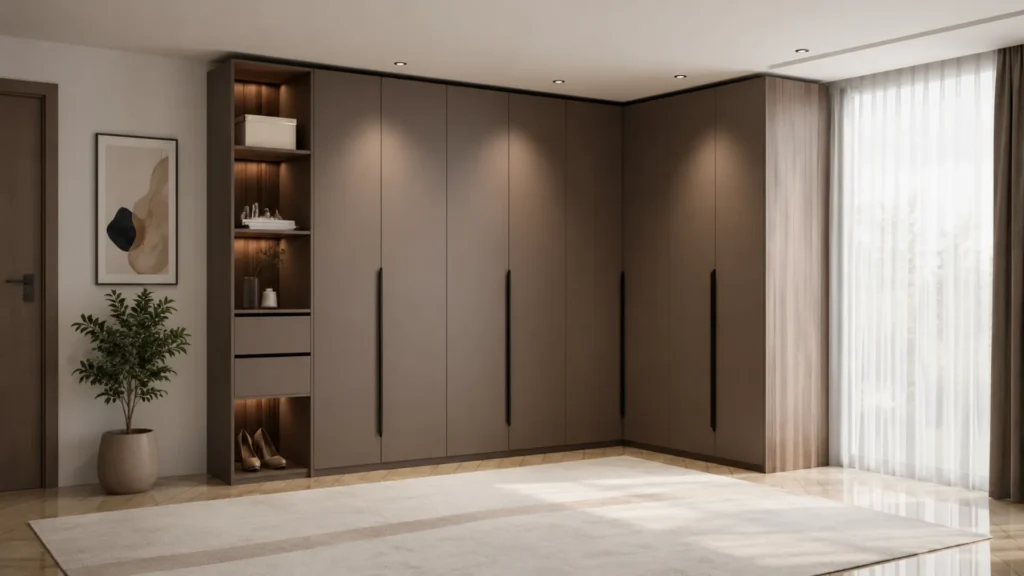
A modular wardrobe should match how you get dressed, not just hold clothes. Split it into sections: hanging clothes, folded garments, shoes, accessories, jewellery. Include adjustable shelves, a pull-out trouser rack, internal drawers, and a loft cabinet on top.
When every item has one spot, your morning routine speeds up and the wardrobe stays organised for months, not weeks.
Think about the sequence you actually get dressed in. It sounds small, but it cuts down the daily search time and keeps you from pulling three drawers open just to find one belt.
When every item has one spot, your morning routine speeds up and the wardrobe stays organised for months, not weeks.
Think about the sequence you actually get dressed in. It sounds small, but it cuts down the daily search time and keeps you from pulling three drawers open just to find one belt.
Wall-Mounted Storage Ideas for Every Room
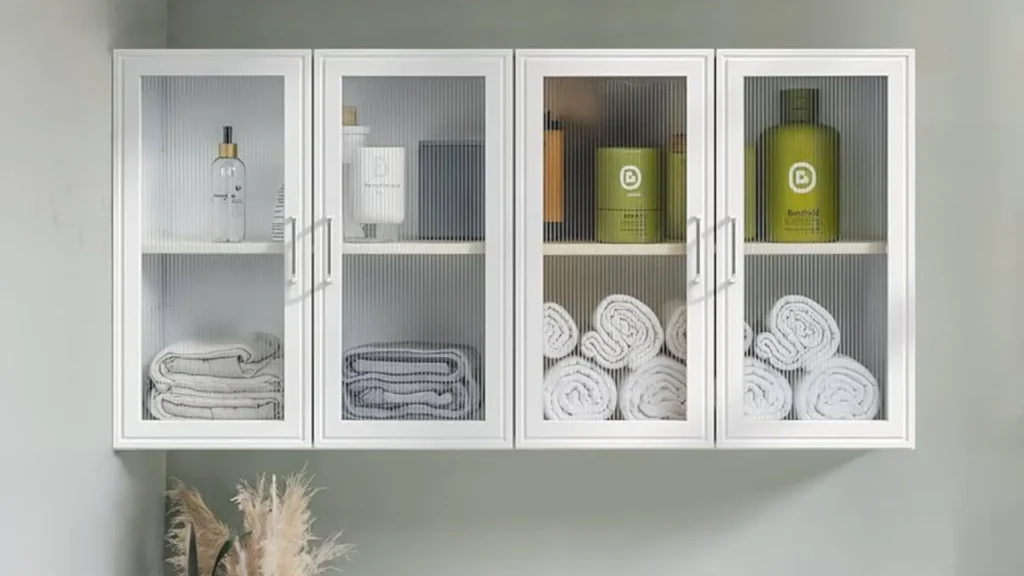
Floor space runs out fast. Walls rarely do.
Wall-mounted shelves work in almost any room. In the living room, they hold books and plants. In the bedroom, they replace a bulky nightstand. In a home office, they keep files and stationery within reach.
Vertical storage keeps items accessible and rooms open. Pegboards are worth a mention here, too. A pegboard panel in a study or utility corner holds tools, folders, or craft supplies on hooks you can rearrange whenever your needs change, unlike a fixed shelf.
Vertical storage keeps items accessible and rooms open. Pegboards are worth a mention here, too. A pegboard panel in a study or utility corner holds tools, folders, or craft supplies on hooks you can rearrange whenever your needs change, unlike a fixed shelf.
Kitchen Corner Storage Solutions That Save Space
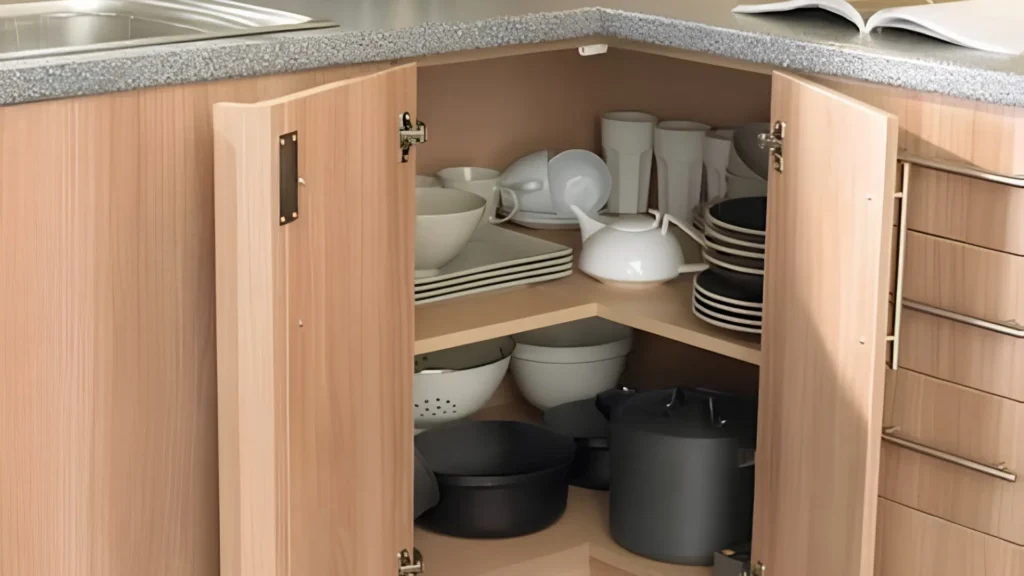
Standard cabinets can’t reach kitchen corners well, so those spots end up empty.
Corner storage systems solve this. Pull-out corner units, carousel shelves, and tall pantry cabinets put utensils, groceries, and cookware within reach.
A kitchen that works well saves you time every day, not just on the days you cook big meals. If a full carousel unit isn’t in the budget, a simple lazy Susan turntable inside an existing corner cabinet does most of the job for a fraction of the price.
Corner storage systems solve this. Pull-out corner units, carousel shelves, and tall pantry cabinets put utensils, groceries, and cookware within reach.
A kitchen that works well saves you time every day, not just on the days you cook big meals. If a full carousel unit isn’t in the budget, a simple lazy Susan turntable inside an existing corner cabinet does most of the job for a fraction of the price.
Utility Room Organisation Tips
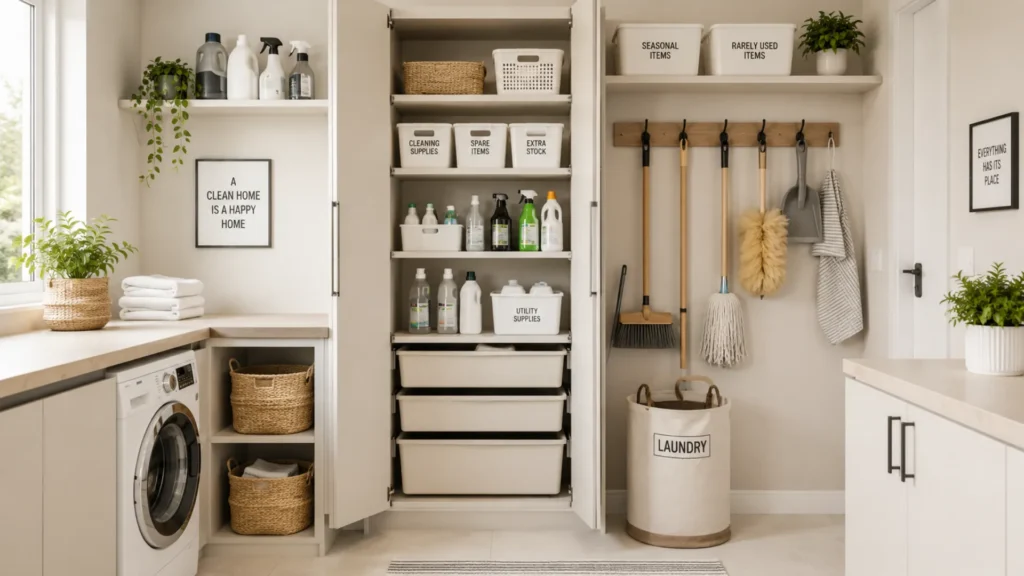
The utility area collects everything: cleaning supplies, laundry baskets, mops, and spare household items.
Plan this space early. Tall cabinets group cleaning supplies together. Wall hooks hold daily tools. Overhead shelves store items you use rarely.
A little planning turns this room into one of the most useful spots in the house. Label the shelves if more than one person in the house uses this space, as it saves you from finding the iron on the wrong shelf every single time.
Plan this space early. Tall cabinets group cleaning supplies together. Wall hooks hold daily tools. Overhead shelves store items you use rarely.
A little planning turns this room into one of the most useful spots in the house. Label the shelves if more than one person in the house uses this space, as it saves you from finding the iron on the wrong shelf every single time.
Loft Storage Ideas for Seasonal Items
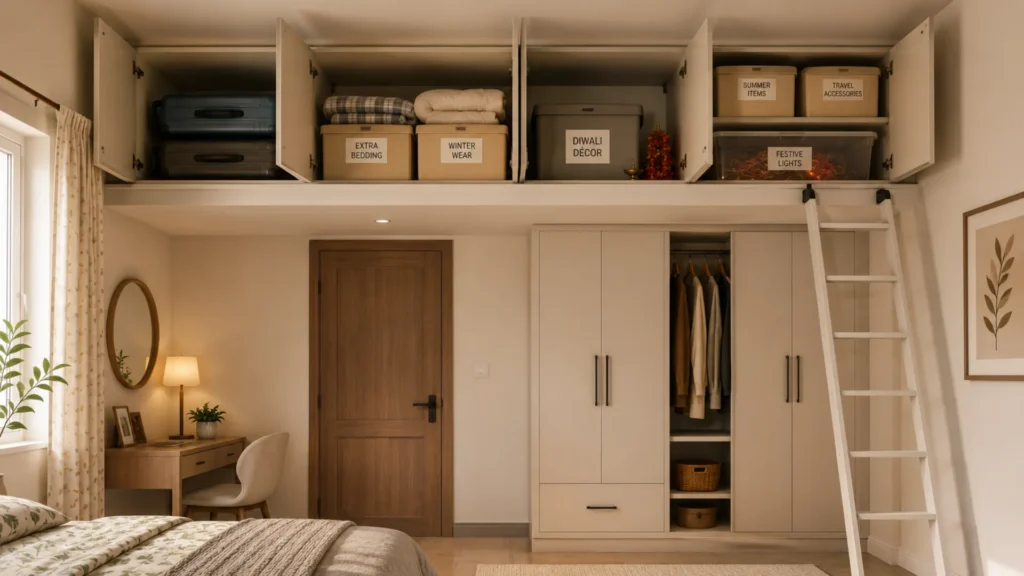
Loft storage suits items you need only a few times a year.Store suitcases, extra bedding, winter clothes, and festival decorations overhead instead of packing your wardrobe. Label the boxes, and you’ll find what you need in seconds.
Group items by season rather than by room. A single labelled box for ‘Diwali décor’ or ‘winter wear’ is easier to pull down once a year than five scattered bags spread across different lofts.
Group items by season rather than by room. A single labelled box for ‘Diwali décor’ or ‘winter wear’ is easier to pull down once a year than five scattered bags spread across different lofts.
Storage Ideas for the Space Under Your Staircase
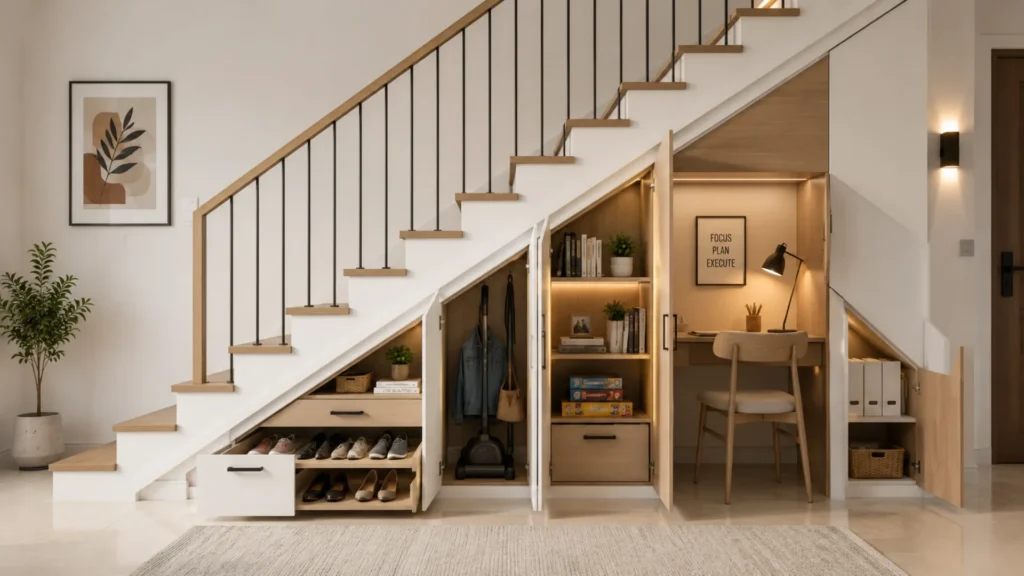
If your home has an internal staircase, the space beneath it holds real potential.
Turn it into closed cabinets, pull-out drawers, a bookshelf, or a shoe rack. Some homeowners convert it into a small study nook or a pet corner instead.
This forgotten space gives you storage without expanding your home’s footprint. The taller end of the triangle works well for hanging coats or storing a vacuum cleaner upright, while the shallow end near the top step suits flat items like board games or files.
This forgotten space gives you storage without expanding your home’s footprint. The taller end of the triangle works well for hanging coats or storing a vacuum cleaner upright, while the shallow end near the top step suits flat items like board games or files.
Space-Saving Furniture with Double Duty
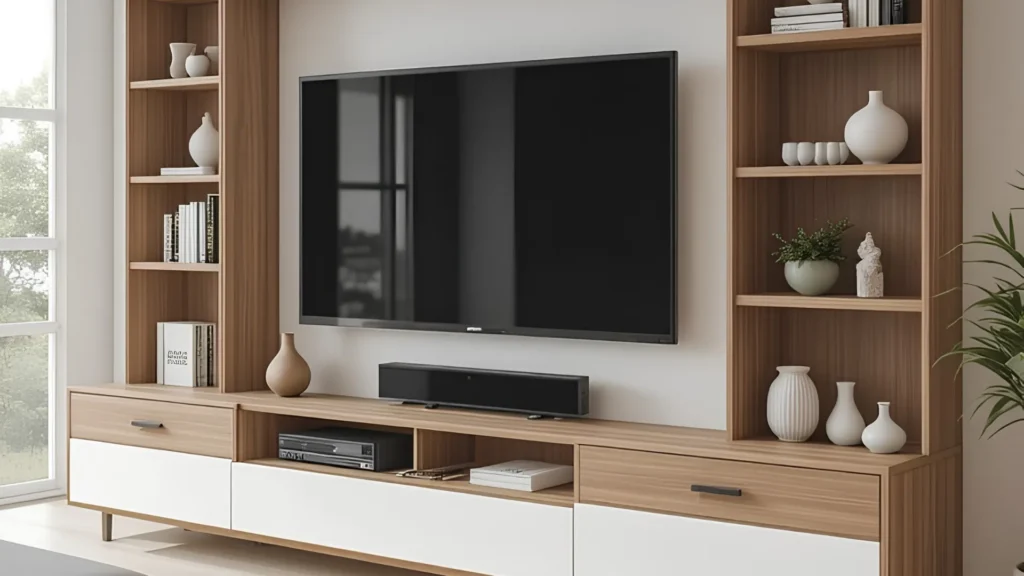
Multi-purpose furniture pays off, especially in smaller apartments.
Storage beds, lift-top coffee tables, dining benches with hidden compartments, and TV units with drawers cut down on extra cabinets. You keep the layout open and gain more places to store daily items.
This is one of the simplest ways to improve storage without cutting into your living space. Before buying any new furniture piece, ask one question can this hold something, or is it just taking up floor space? That single filter changes what ends up in your cart.
This is one of the simplest ways to improve storage without cutting into your living space. Before buying any new furniture piece, ask one question can this hold something, or is it just taking up floor space? That single filter changes what ends up in your cart.
Common Home Storage Mistakes to Avoid
- Skipping wall space that could hold shelves
- Installing wardrobes with fixed shelves only
- Leaving kitchen corners empty
- Buying oversized furniture for small rooms
- Skipping storage plans for seasonal items
- Ignoring the utility area during design
- Placing daily-use items in hard-to-reach spots
- Buying storage units before measuring what you actually own
Make Storage Part of Your Home's Design, Not an Afterthought
Every home holds unused space. The area under your bed, the wall above your desk, the corner of your kitchen, the space below your staircase, all of it can become storage with the right plan.
The best storage fits into your home’s design instead of getting bolted on later. Combine hidden storage, a wardrobe built around your routine, wall shelves, and multi-purpose furniture, and your home stays organised without extra effort.
If you’re looking for more ideas specifically for compact homes, read our guide on smart storage solutions for small apartments, where we share practical tips to make every square foot more functional.