Table of Contents
A garden with no clear path feels incomplete. People end up walking straight through the grass and flower beds instead of around them. The right garden path design fixes that, and gives your yard a sense of direction. Here are ten garden path design ideas. From a simple weekend gravel job to a mosaic that turns the walkway into art. Pick the one that fits your yard and your budget before you pick up a shovel.
What is a Garden Pathway Design and why is it important?
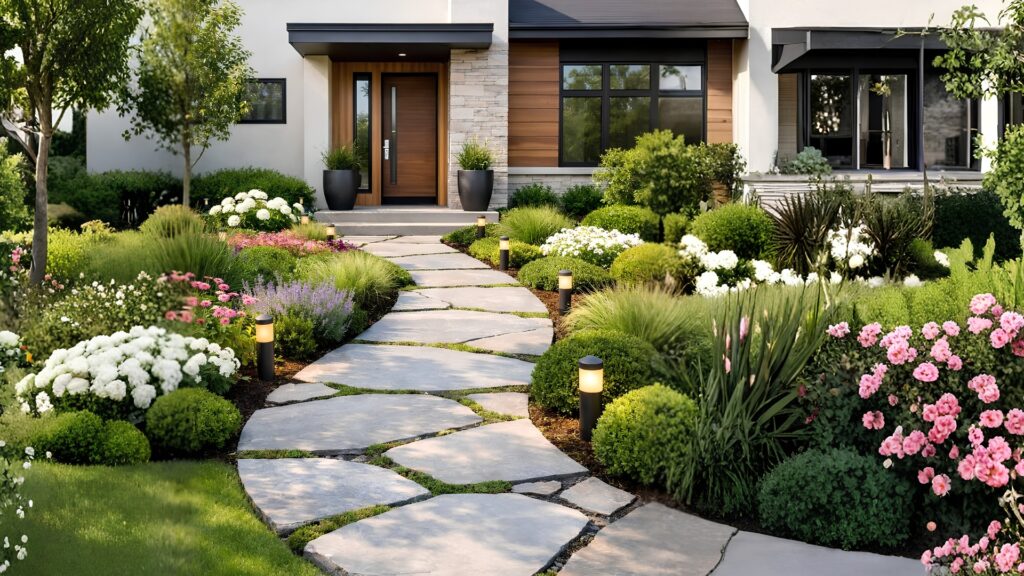
A garden pathway design is a defined walking route through a yard, built from materials like stone, gravel, brick, or wood. That directs foot traffic instead of letting people walk across the lawn.
It protects the lawn and flower beds from wear caused by foot traffic. It gives the garden a sense of order and structure. It guides visitors towards specific areas, like a seating space or a feature plant. It also keeps feet dry and clean when the ground is wet after the rain.
Read Also: Complete Home Interior Guide Plane
Garden Path Design Ideas to Try in Your Yard
Each idea below fits a different budget, climate, and garden style. Read through a few before you decide, since the right path often depends on how the rest of your yard already looks.
1. Stepping Stone Path
Stepping stones look like they have always been part of the garden. You can use polished granite for a modern look, or rough sandstone if you want something closer to a forest trail. Space the stones 12-15 inches apart, about one normal step, and set each one in sand so it doesn’t wobble. Once a year, lift the stones and smooth out the sand underneath. That’s all the upkeep this path needs.
2. Gravel Garden Path
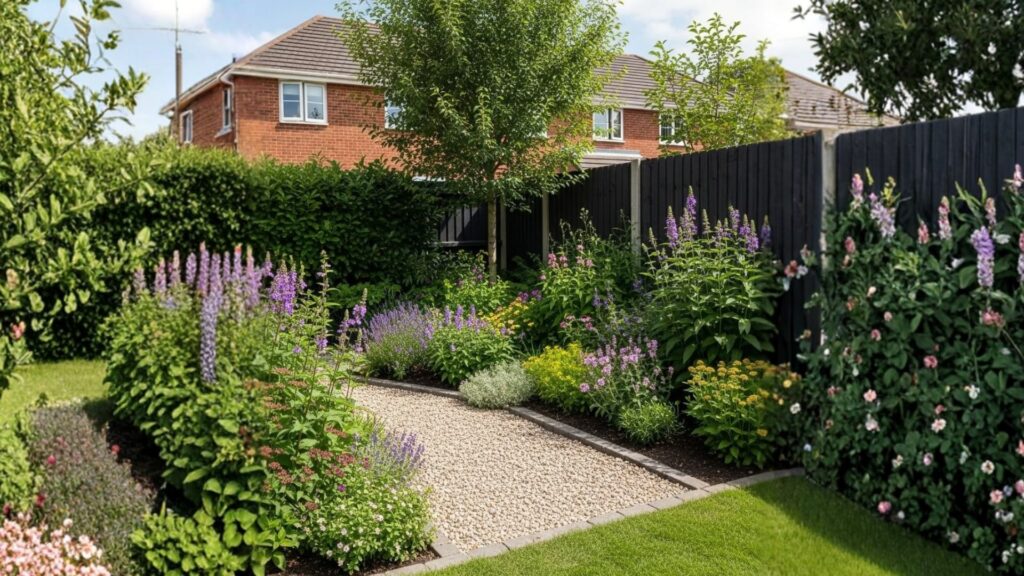
If you are after a budget-friendly backyard walkway, gravel is the cheapest and quickest path to lay. One person can finish a short stretch in a weekend. Pea gravel feels soft underfoot, so it’s a nice choice if you like walking barefoot. Crushed granite packs down harder and holds up better under bikes or a wheelbarrow. Whichever you pick, add a metal or timber edge, or the stone will spread into your flower beds within months. Top up the gravel every couple of years, since walking on it slowly pushes the stones down.
3. Brick Pathway Design
As far as outdoor path materials go, brick looks settled and finished right from day one. That’s why you see it more in older, traditional gardens than new ones. The pattern you choose changes the whole feel. Herringbone looks formal, basket weave looks busier, and running bond looks like a hallway floor. Reclaimed brick, if you can find it, has a weathered colour that new brick just can’t copy. Sand-set brick shifts a little over time, so plan to sweep fresh sand into the gaps every year or two.
4. Wood Boardwalk Path
Raised wood planks handle something that gravel and stone cannot. Near a pond or in a low, damp corner, a boardwalk keeps your feet dry while the ground stays wet. It also gives the garden a cabin or coastal feel you won’t get any other way. Composite decking lasts longer than treated wood in humid weather, since it won’t rot or attract termites, but it costs more to start.
5. Circular Paver Path
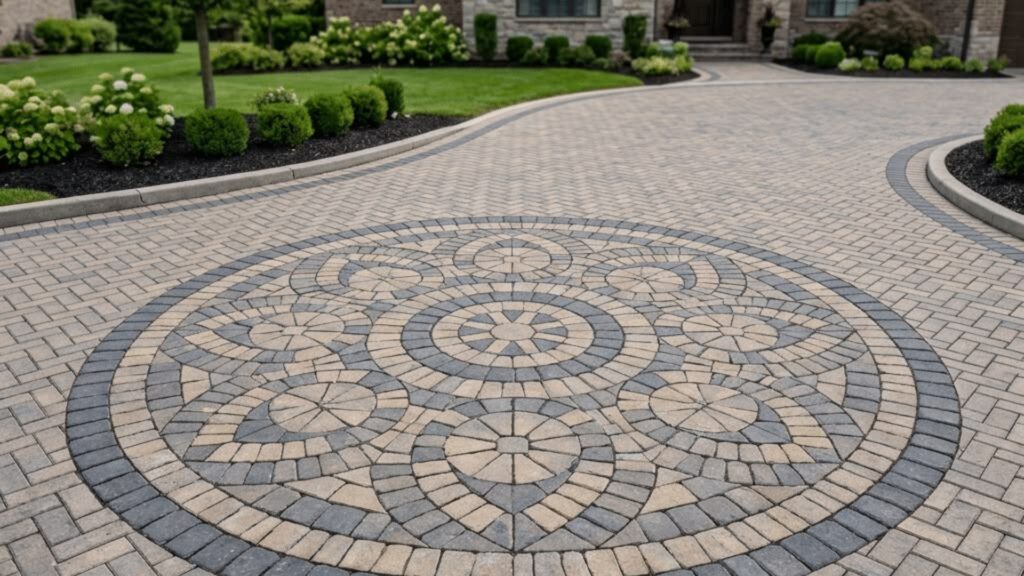
A straight path just gets you from one spot to another. A curving line of round pavers slows people down and gets them looking around. This is exactly what you want if there is a fountain or a tree worth admiring on the way. Concrete pavers are the budget-friendly choice. Natural stone rounds cost more, but they age into the garden instead of just sitting on top of it. Mix a few different paver sizes along the curve, and the path looks designed.
Read Also: Top 10 Home Colour Combination Ideas
6. Pebble and Stone Combination Path
This idea solves a money problem. Paving a whole path in stone gets expensive fast once you are covering a real distance. Instead, space stone pavers further apart than usual and fill the gaps with river pebbles. You still get a solid stone surface to walk on, but you are using a lot less of it, which keeps the cost down.
7. Illuminated Garden Path
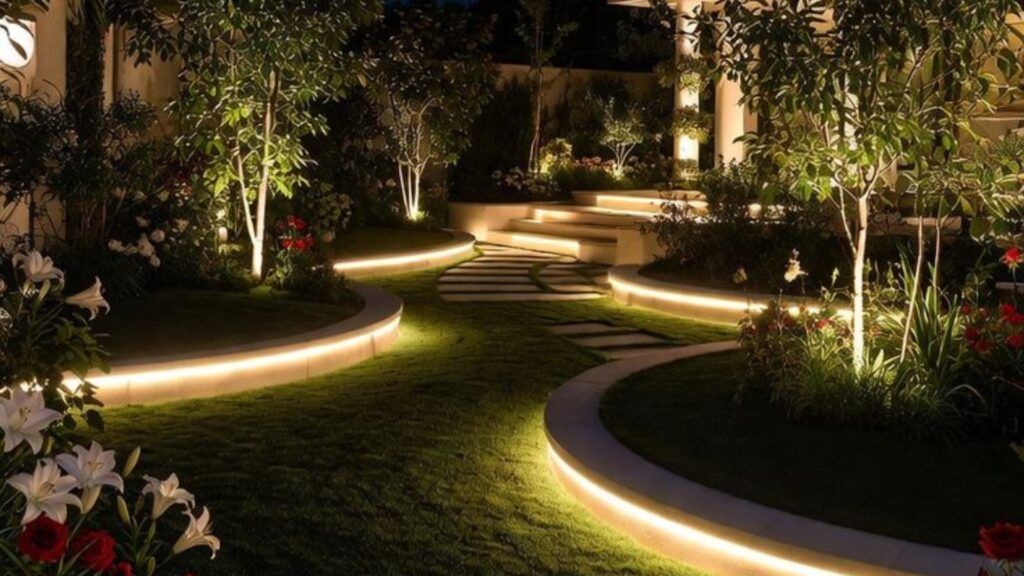
Most garden paths vanish once the sun goes down, and that’s a safety problem. Solar stake lights are the easiest fix. No wiring involved, just push them into the ground, and they charge on their own. Low-voltage LED lights need a cable run, but they give a steadier, brighter glow that solar can’t always match on cloudy days. If you want something more understated, recess the lights right into the stepping stones so the path glows with no visible fixture in sight.
8. Glass and Paver Path
Crushed recycled glass packed between concrete or stone pavers catches light in a way gravel and pebbles never do. It has a soft shimmer even in plain daylight. Some homeowners take it further and use glass stepping stones with LEDs built in, which look striking after dark. This works best in a modern garden with clean lines.
9. Flagstone Pathway
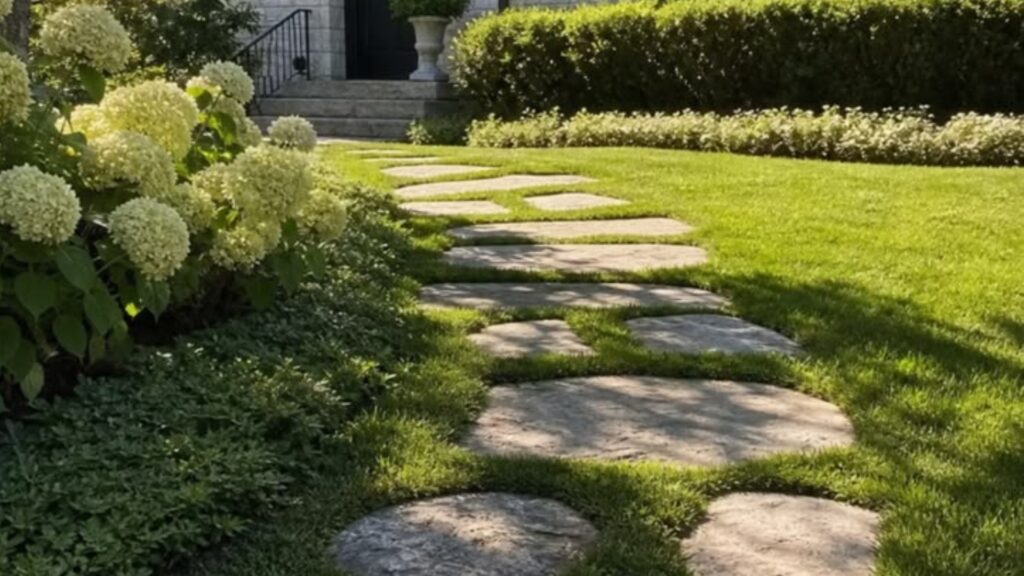
No two flagstone paths ever look alike, since each piece keeps its natural, uneven edge instead of being cut to match the rest. That’s exactly why it works so well in a cottage or woodland garden, where a straight, near-brick line would feel out of place. Lay the pieces close together for a firm surface you can walk on in any shoes. Or space them out and let moss or creeping thyme grow in the gaps for a softer, greener look.
10. Mosaic Tile Path
Out of everything on this list, the mosaic is the one that feels more like art than a walkway. Broken tiles, ceramic pieces, or bits of glass get pressed into a mortar base in any pattern you like. It takes real time and patience to get right, so it’s not a weekend job. But it earns its spot near an entrance or a seating area, somewhere people will actually stop and look down at their feet.
Choosing the Right Garden Pathway Design for Your Space
The best garden pathway ideas depend on your yard size, budget, and the look you want to achieve. Gravel and stepping stones work well for simple projects, while brick, flagstone, and mosaic paths make a stronger design statement. Plan the path carefully, choose materials that suit your climate, and build it with proper edging and drainage. A well-designed garden pathway not only makes your outdoor space easier to use but also improves its overall appearance for years to come.