Table of Contents
This gap between what people expect to pay and what interior design actually costs is one of the biggest sources of confusion for homeowners. And it comes down to one simple thing, most people are pricing furniture, not a project.
What Happens If You Compare Two Different Things?
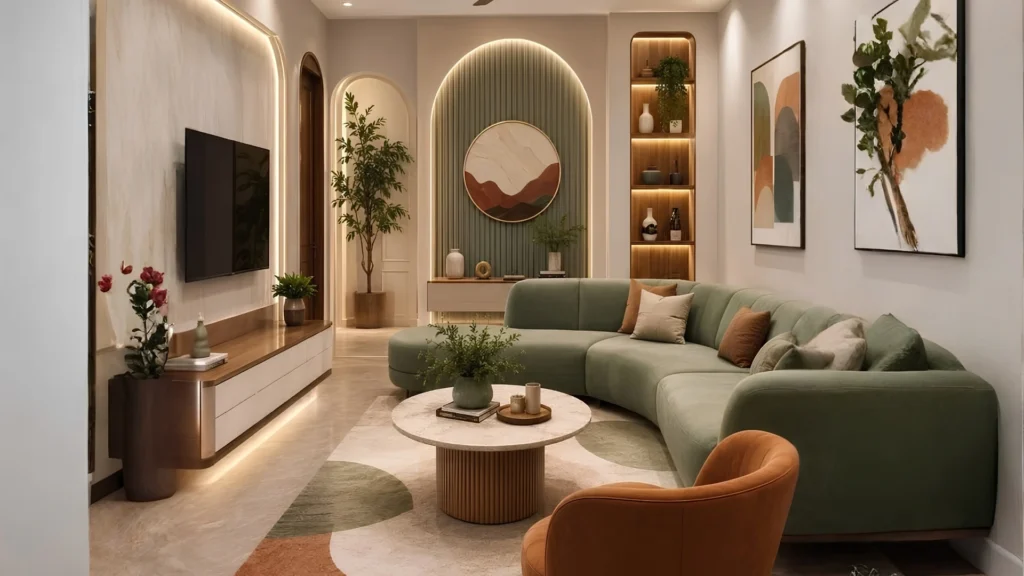
Two homeowners can buy the same furniture pieces. One pays a fraction of what the other pays for the full home interior. The difference isn’t the furniture. It’s everything built around it.
Where Does Your Interior Design Budget Go?
| Cost Area | What it Covers |
|---|---|
| Modular Kitchen | Cabinets, shutters, hardware, countertop |
| Wardrobes and Storage | Carcass, shutters, internal storage |
| Carpentry (Other Units, TV Panel, Study) | TV unit, study, storage units |
| False Ceiling and Lighting | False ceiling, lights, profiles |
| Electrical and Civil Work | Wiring, switches, additional points |
| Painting and Finishes | Painting, polishing and related work |
| Civil Work | Plumbing, wall changes, other site work |
| Design and Supervision | Planning, drawings and site coordination |
What Drives Modular Kitchen Cost Higher?
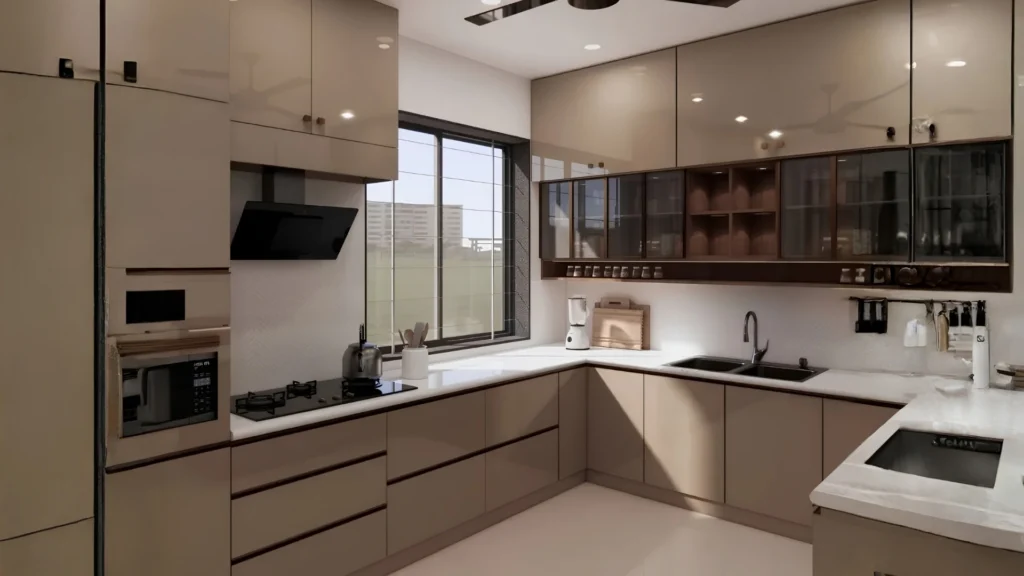
Material choice moves the number fast. A plywood carcass with laminate shutters sits at one end. Marine plywood with acrylic or PU finish sits far above it. Hardware brands, soft-close fittings, and countertop material (laminate vs quartz vs granite) each add their own layer.
A 10×10 kitchen doesn’t automatically have a fixed cost because kitchen size alone doesn’t determine the amount of cabinetry.
- cabinet configuration
- running feet
- material
- hardware
- countertop
- appliances
- finishes
You must Explore- 5 Budget-friendly Home Decor Ideas for a Designer Look
What Affects Wardrobe Cost?
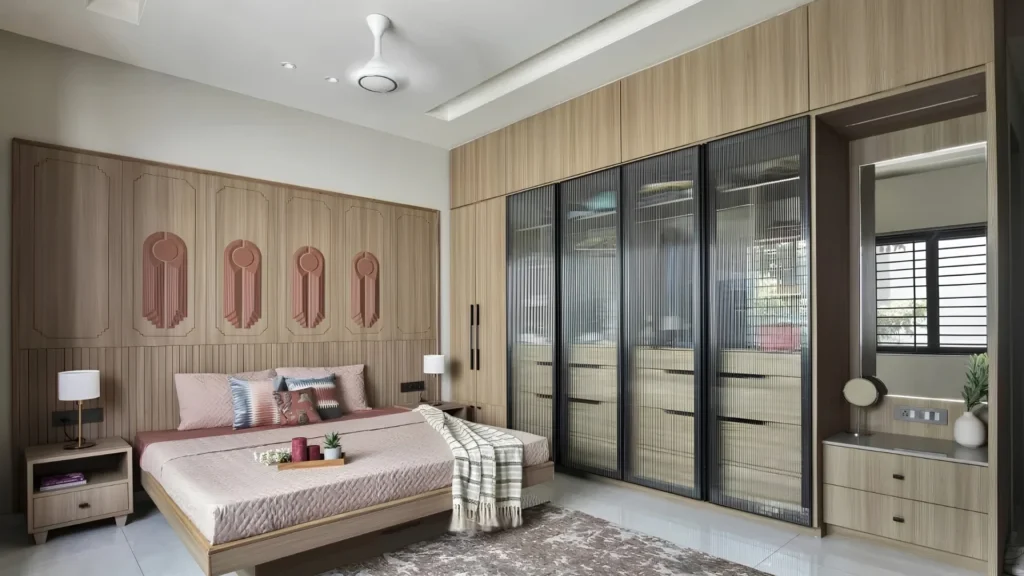
For a mid-range 8 ft wardrobe, budget somewhere between ₹40,000 and ₹90,000 depending on shutter material and internal layout. Loft units, drawer inserts, and premium finishes push it higher.
What is the Difference Between Design Fee and Execution Costs?
Homeowners often assume the interior design cost they’re quoted is entirely the designer’s fee. It isn’t. The design fee covers planning, drawings, material selection, and project supervision. Execution cost covers the actual materials, labour, and installation.
On a full home project, the design fee is a smaller slice of the total, the execution cost is what makes up the bulk of the number. This split matters because it explains why a designer’s fee alone never tells you the full home interior cost.
Why Do Similar Homes Get Different Interior Design Quotes?
- Scope difference: one quote covers kitchen and wardrobes only; the other covers the full home
- Material grade: plywood vs MDF, laminate vs veneer, basic hardware vs branded hardware
- Finish level: factory-finished shutters vs on-site painted finishes
- What’s included: some quotes bundle false ceiling and electrical work, others price them separately
- Labour and location: execution cost varies by city and by the contractor’s own overheads
What are Hidden Costs in Cheap Interior Design Quotes?
- Electrical rewiring and additional points
- False ceiling and lighting layout
- Plumbing changes for kitchen or bathroom
- Painting and wall finishing
- Site supervision during execution
- Transport and installation charges
How to Get Good Interiors on a Smaller Budget?
- Prioritise the kitchen and wardrobes first. These see daily use and hold the most functional value.
- Pick laminate over veneer or acrylic for shutters where budget is tight. The cost difference is significant.
- Reduce false ceiling coverage to cove lighting or a partial ceiling instead of a full one.
- Complete the kitchen and bedrooms first, add living room detailing later.
- Get a detailed BOQ (bill of quantities) so you know exactly what’s driving the number, and where you can trim.
None of this means cutting corners on quality, it means spending on what shows up in daily use and pulling back on what doesn’t.
You Must Explore- Minimalist Living Room Design Ideas
What Should You Keep in Mind When Planning Your Interior Budget?
Home interior design costs can look high because it’s rarely just furniture, it’s planning, execution, labour, and materials working together to build a livable space. Once you see the full picture, the number stops feeling random and starts making sense. The next time a quote catches you off guard, ask what it actually covers before deciding it’s overpriced. Nine times out of ten, the answer is in the scope, not in the markup.