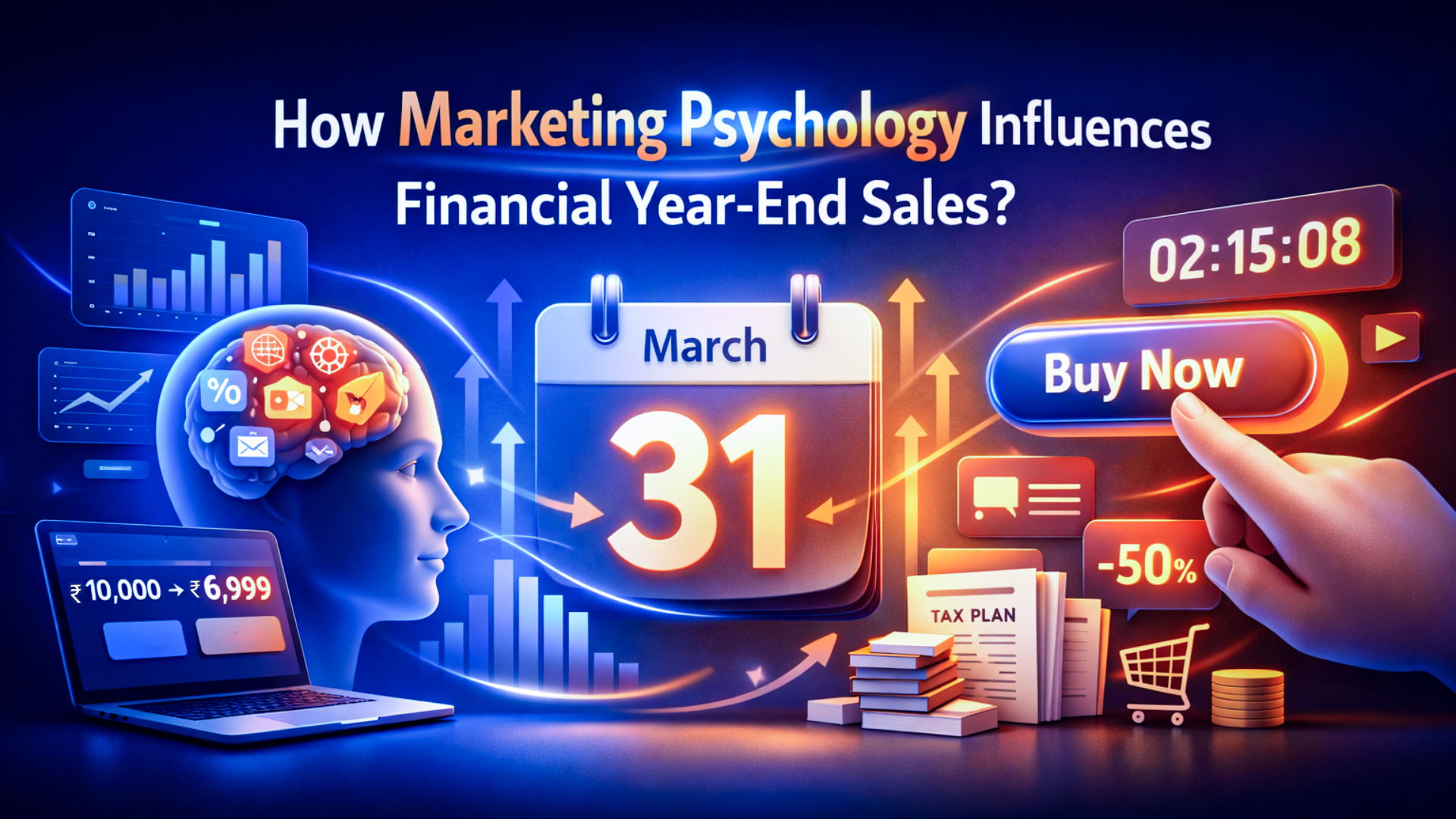
Every year, as March 31st gets closer, something predictable happens across India and many other markets. People rush to buy insurance, Brands push their biggest discounts. And somehow, even people who said I’ll think about it in January are clicking ‘Buy Now’.
This is not just about deadlines. This is marketing psychology meeting a very real financial moment. If you are a brand, a marketer, or a business owner, understanding this overlap can completely change how you plan your Q4 campaigns.
What is Marketing Psychology and How does Marketing Psychology Drive Year-End Sales?
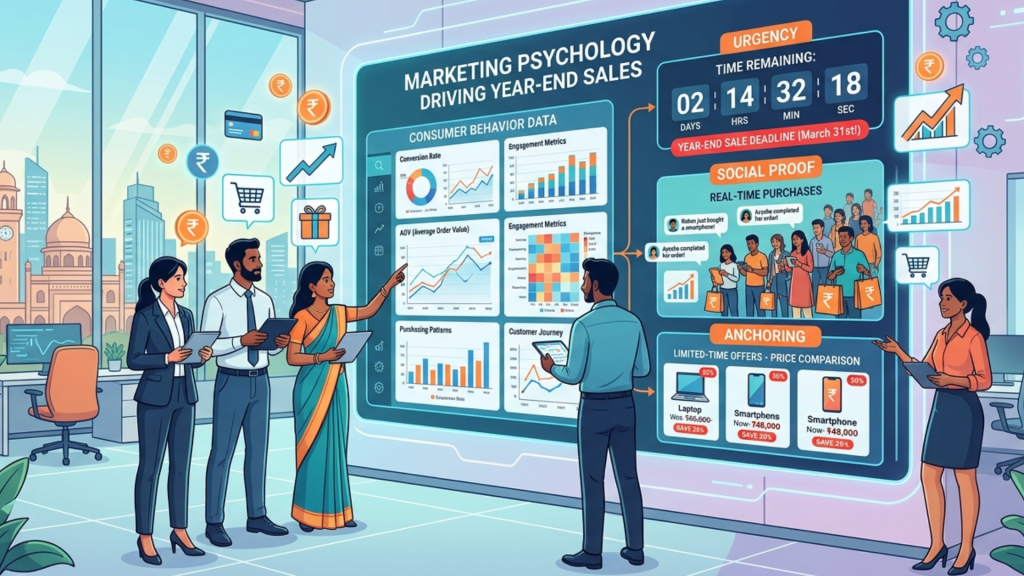
Marketing psychology is the act of using research to understand why people think and act the way they do. The way people respond to marketing can be better understood when marketers apply common psychological principles to their strategies. The psychology of marketing gives marketers an understanding of humans to help influence consumer behavior to make purchases or take action in a specific way.
Marketing psychology drives financial year-end sales by activating three core human triggers. Urgency (fear of losing tax benefits or deals), social proof (seeing others act before the deadline), and anchoring (comparing full-price versus year-end discounted offers). Brands that align their messaging with the psychological pressure of deadlines consistently outperform those that rely on discounts alone.
Why is the Financial Year-End a Psychological Goldmine?

The financial year-end (March 31st in India, December 31st in most Western markets) is not just a calendar event. It is a psychological state, one where three powerful forces come together at the same time.
1. Real Deadlines Activate Real Urgency
Most manufactured urgency in marketing is something consumers have learned to ignore. But a financial year-end deadline is different, it is real, immovable, and has genuine consequences. If you do not invest in your tax-saving instruments before March 31st, you actually lose the benefit. This is not a marketing trick. That is life.
When urgency is real, the psychological response is far stronger. Marketers who align their messaging with reality, rather than just slapping a countdown timer on a webpage.
2. Loss Aversion Peaks Near Deadlines
Behavioral encounter Daniel Kahneman’s research showed that humans feel the pain of losing something about twice as strongly as the pleasure of gaining the same thing. Near a financial deadline, this bias is in overdrive.
People are not thinking ‘I could have saved money if I invested now’. They are thinking ‘I will lose my tax benefit if I do not act’. That shift in framing, from gain to loss, is one of the most powerful motivators in human psychology.
3. The ‘Fresh Start’ Effect Follows Right After
April 1st is interesting for a different reason. Research by Hengchen Dai and colleagues on ‘temporal landmarks’ shows that people are far more likely to pursue new goals after a meaningful date reset, a new year, a new month, a birthday, or in this case, a new financial year.
This means the financial year-end is actually two opportunities in one. The urgency window before March 31st, and the fresh-start motivation window that opens in April. Smart brands plan for both.
The Psychology of Marketing Principles at Work During Year-End

1. Scarcity
At year-end, time itself becomes scarce. Brands do not need to manufacture urgency, they just need to reflect reality clearly. The most effective year-end campaigns make the deadline impossible to miss, without being aggressive or manipulative.
2. Social Proof
When people around you are rushing to do something, you feel the pull even more strongly. In March, social proof becomes ambient, it is in every office conversation, every finance group on WhatsApp, every colleague asking ‘Have you done tax saving?’
3. Anchoring
Year-end pricing is a masterclass in anchoring. When a product that cost ₹10,000 normally is shown at ₹6,999 with a clear ‘financial year-end price’ label, the ₹10,000 becomes the anchor. Even people who have bought from you before now have a frame of reference.
The key is consistency, the regular price must be shown clearly and credibly. Invented or exaggerated anchor prices backfire badly, especially with a financially literate audience.
4. Reciprocity
Year-end is a time when consumers are actively researching. They want calculators, guides, and companions. Brands that give generously at this stage, free tax calculator comparison tools, downloadable year-end checklists, build enormous goodwill a single sales pitch. This is not a soft strategy. Reciprocity is one of the most evidence-baked conversion drives in behavioural science. Give something genuinely useful, and your conversion rates at year-end will reflect it.
Industries That Win Big with Year-End Psychology
1. Personal Finance and Investment Platforms
This is the most obvious category, ELSS funds, PPF, NPS, and insurance products all have tax-saving benefits that expire on March 31st. Platforms like Zerodha, Groww, and Policybazaar run some of their highest-performing campaigns of the year in this window.
2. B2B SaaS and Business Software
Finance teams want to close their books properly. IT budgets need to be spent before the fiscal year resets. Companies want to lock in pricing before potential increases. B2B brands that understand this rush annual deal renewals and new sign-ups to coincide with this urgency window.
3. EdTech and Professional Development
Courses and certifications can sometimes be claimed as business or self-development expenses. EdTech brands that position their products this way during year-end sees measurable spikes in enrolment from working professionals who have ‘use it or lose it’ training budgets.
Conclusion
Financial year-end sales are not driven by discounts alone. They are driven by powerful psychological triggers like urgency, loss aversion, and social proof that become stronger as deadlines approach. Brands that understand this behaviour can design smarter campaigns that align with how people actually make decisions. When marketing psychology meets real financial deadlines, conversions naturally follow.