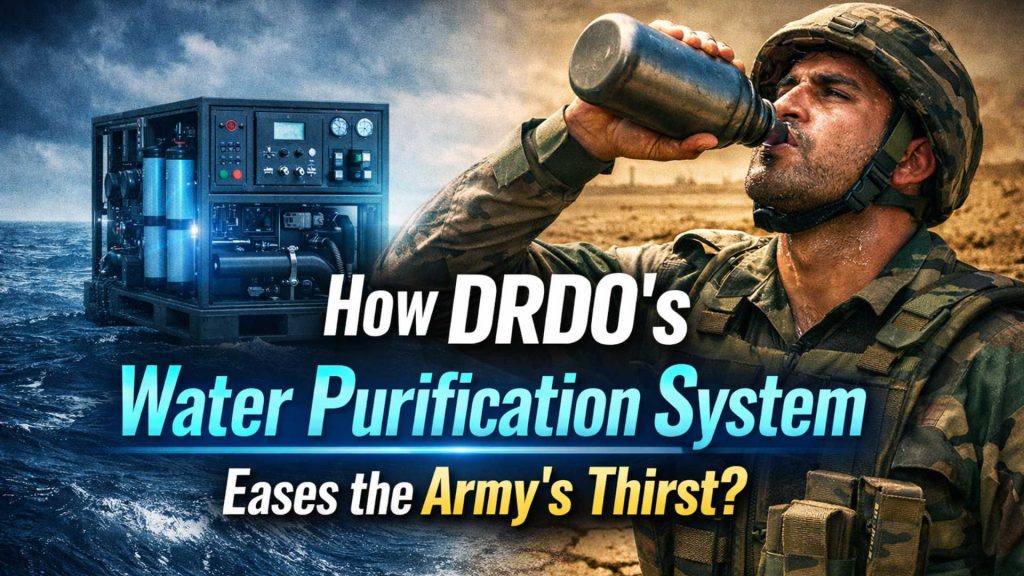
For India’s soldiers guarding the vast coastline from Gujarat to the Sundarbans, or holding posts in the saline flats of the Rann of Kutch, a fundamental enemy isn’t always across the border. It’s the very water that surrounds them. Access to safe drinking water in these remote coastal regions has perennially been a logistical nightmare, tying up resources and personnel.
In a strategic move to turn this vulnerability into strength, the Defence Research and Development Organisation (DRDO) has officially unveiled a game-changer: the SWaDeS (Sea Water Desalination System). This indigenous purification system isn’t just another piece of kit; it’s a decisive leap in self-reliance and soldier welfare for the Indian army and navy.
The Real Water Challenges Faced by Frontline Troops
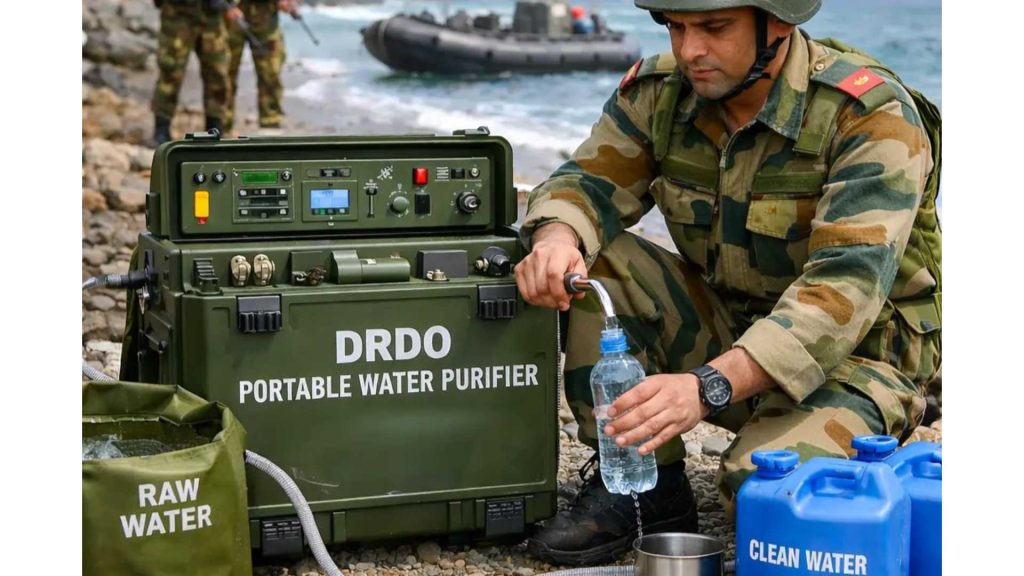
The challenge is stark. Transporting thousands of litres of fresh water to remote island posts, naval vessels on extended patrol, or inland stations with brackish groundwater is a costly, fuel-intensive, and vulnerable process. It involves dedicated supply chains that can be disrupted by weather or operational secrecy.
As noted in discussions among veterans and analysts on platforms like YouTube and defence forums (User-Generated Content), this dependency was a critical flaw. “A forward post’s operational endurance was often dictated by its water tanker schedule, not just its ammunition,” commented a retired logistics officer in an online thread. This purification gap meant troops in some of India’s most strategic coastal locations were paradoxically at risk from the most basic scarcity.
How SWaDeS Became a Technical Victory at Sea
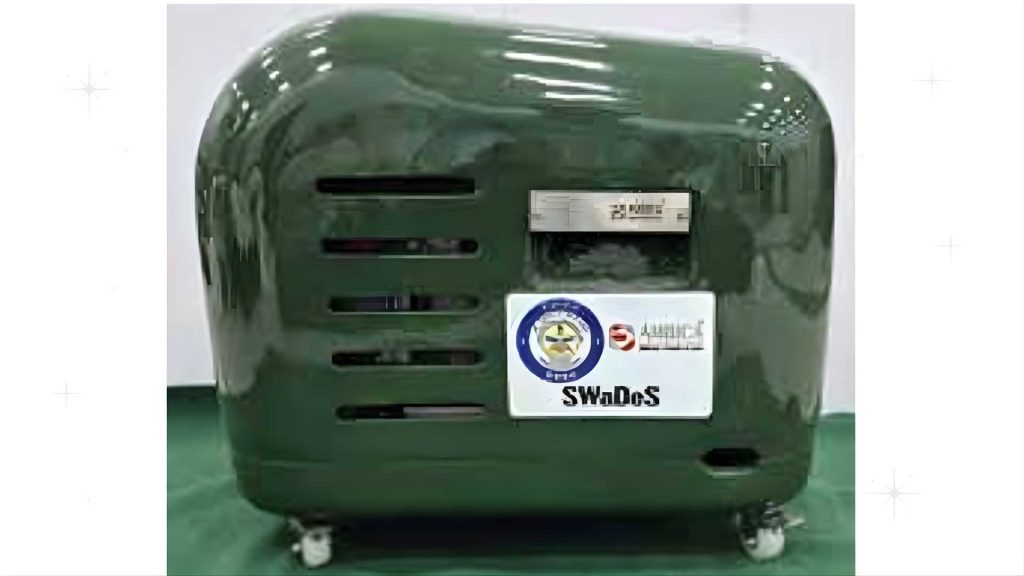
Developed by DRDO’s pioneering Defence Laboratory in Jodhpur (experts in arid and extreme-condition tech), SWaDeS is a robust, portable answer. But what makes it a “big deal”? Based on official specs and technical breakdowns shared by defence enthusiasts (UGC), its genius lies in its targeted efficiency:
- High-Yield Purification: The system is engineered to convert seawater or salty inland water into potable drinking water at a rate of approximately 1000 litres per hour. This volume can meet the daily needs of a small military unit, effectively creating a self-sufficient water source from an abundant, if unusable, one.
- Built for the Coastal Theatre: Unlike civilian models, SWaDeS is built for harsh, off-grid conditions. It operates on a standard 15 kW diesel generator, a common military issue, ensuring independence from unreliable local power grids. Its portability is key for rapid deployment to different coastal region posts or onto vessels.
- Two-Stage Filtration Mastery: This is the core of its reliability. The system uses a two-stage Reverse Osmosis (RO) purification process specifically designed for the variable and high salinity of the Indian Ocean and inland saline sources. A detailed technical analysis posted on a science blog (UGC) explained: “The first RO stage handles the brutal initial salt load, and the second stage polishes the water to meet and exceed IS 10500 drinking water standards. This design prevents rapid membrane fouling, a common failure point, guaranteeing clean water output in consistently tough conditions.”
More Than Just Clean Water: A Strategic Advantage
- Operational Independence: This is the foremost military gain. Units can now sustain themselves in remote coastal and inland positions indefinitely from a tactical perspective. It severs a critical logistical tether, enhancing strategic flexibility and resilience. “It allows commanders to think about the mission, not the water convoy,” noted a commentator on a defence news article.
- A Direct Morale and Force Multiplier: Reliable access to clean drinking water is a profound force multiplier. It directly impacts soldier health, cognitive function, and morale—critical in high-stress deployments. In online discussions, this aspect is highlighted as a “silent win.” It’s a tangible improvement in the quality of life for the Indian army jawan and naval sailor stationed in harsh, lonely outposts.
- Economic and Tactical Efficiency: While the DRDO has invested in R&D, the lifecycle cost saves millions otherwise spent on fuel, transportation, and maintenance of complex water supply lines. It also reduces the tactical footprint and risk associated with frequent supply movements.
- The Dual-Use Promise: The underlying robust purification system technology holds immense promise for coastal communities facing water scarcity and for disaster relief during cyclones or floods, where water infrastructure is the first to fail. This aligns with DRDO’s growing focus on impactful spin-off technologies.
Securing the Water Line
This victory in purification technology is a deep, strategic hydration of India’s defensive capabilities, proving that sometimes the most powerful advance is ensuring the most basic welfare of the nation’s defenders. The SWaDeS system doesn’t just produce drinking water; it produces operational confidence.