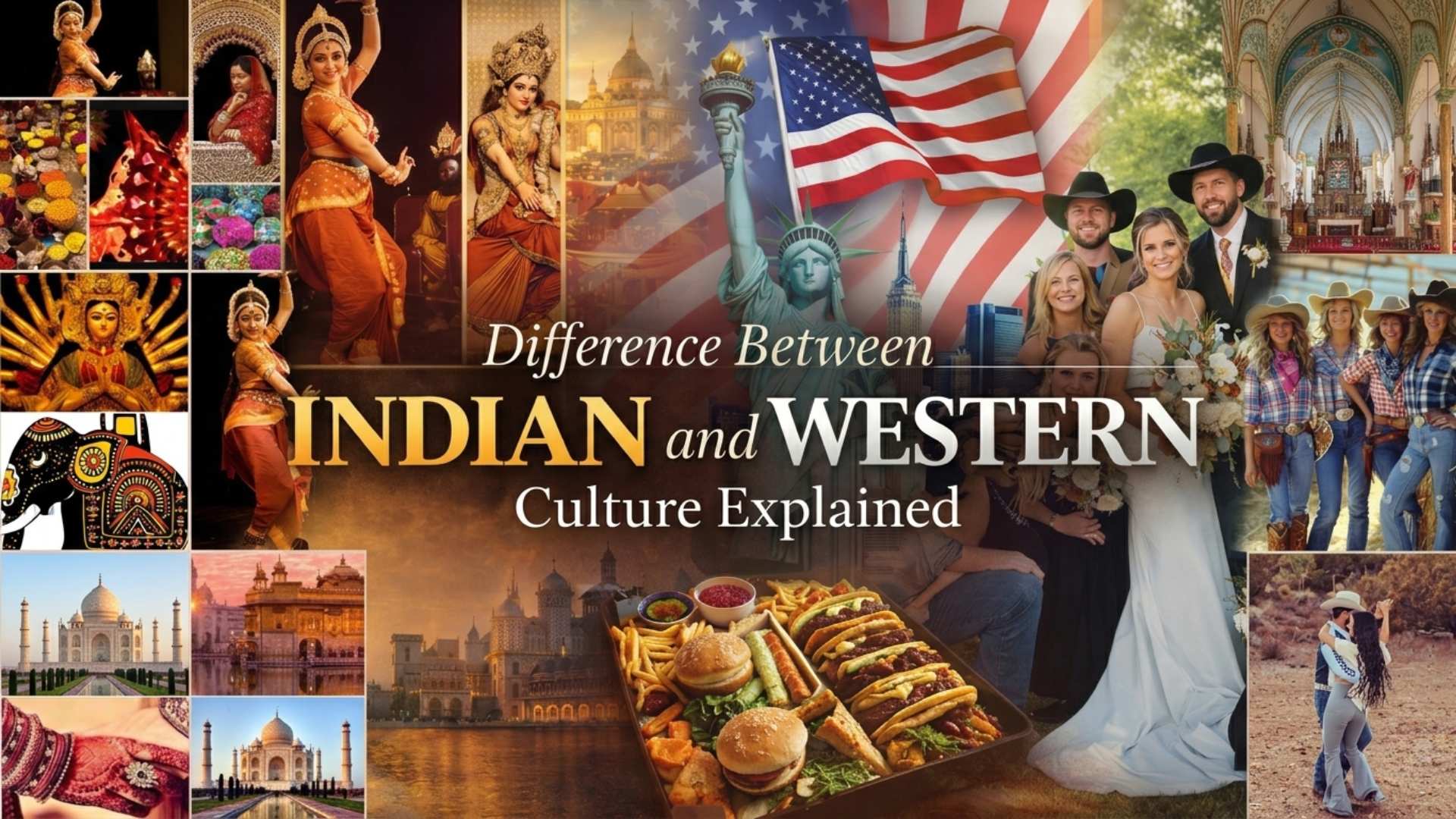
With over 5, 000 years of history, Indian civilization and culture are based on philosophy, spirituality, and a sense of collectivism. In contrast, Western culture is based on the Renaissance, the Industrial Revolution, and liberal democracy, which focuses on the individual, innovation, and personal freedom.
What is the Core Difference Between Indian and Western Culture?
Indian culture is based on collectivism, spiritual practices, and family-oriented living, which we see as the foundation of its values. In the West, we see a culture that places the individual, personal freedom, and secular institutions as its main values. These values, in turn, play out in all aspects of life, from what is accepted in social norms and food choices to marriage, education, and how we communicate with each other.
What Is Indian Culture?
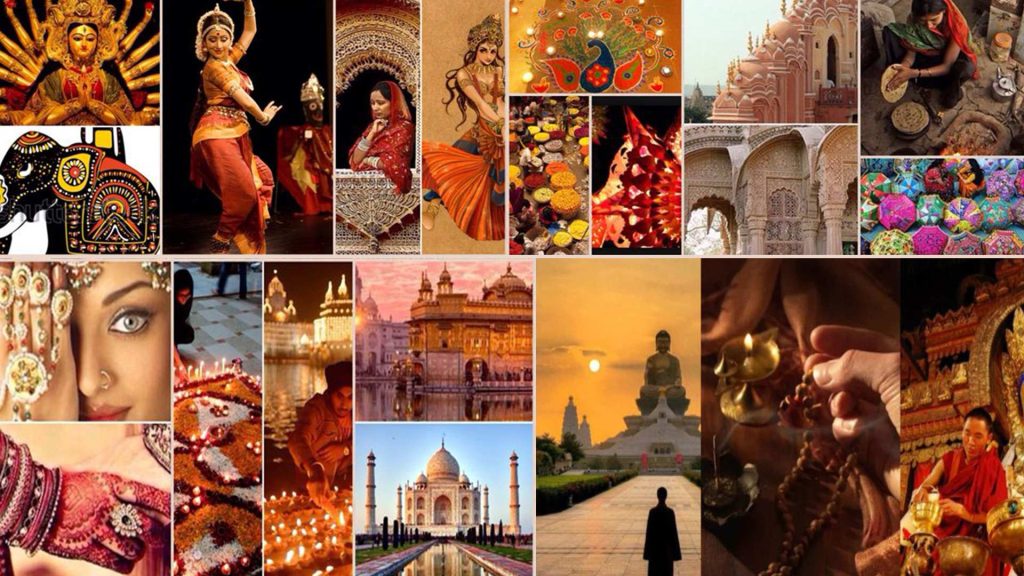
Indian culture is not a single, unified set of practices; it is a mosaic of thousands of languages, religions, regional customs, and art forms. Hinduism, Buddhism, Jainism, Sikhism, Islam, Christianity, and many other faiths coexist within one nation, forming a unique cultural tapestry found nowhere else in the world.
Key Characteristics of Indian Culture
- Strong emphasis on family and community bonds
- Respect for elders as a foundational social norm
- Spirituality and religion are integrated into daily life
- Rich traditions in art, music, dance, and literature
- Hospitality expressed through the concept of Atithi Devo Bhava, the guest is God
- Arranged marriages remain widely practiced
- Vegetarianism prevalent due to religious and ethical values
What Is Western Culture?

At its core, Western culture places the individual at the center of society. Personal rights, freedom of expression, democratic governance, and scientific inquiry are its defining pillars. Western societies tend to separate religion from public institutions and celebrate innovation, competition, and self-determination.
Key Characteristics of Western Culture
- Strong emphasis on individual rights and personal autonomy
- Nuclear family structure is more common than the extended family
- Secular governance and separation of church and state
- Direct, assertive communication style
- High importance is placed on career and personal achievement
- Love marriages based on personal choice are the norm
- Fast-paced, convenience-driven lifestyle
Difference Between Indian and Western Culture: Side-by-Side Comparison
| Aspect | Indian Culture | Western Culture |
|---|---|---|
| Family Structure | Extended family; multiple generations under one roof | Nuclear family; independent households preferred |
| Social Values | Collectivism: community interests first | Individualism: personal goals come first |
| Marriage | Arranged marriages are common; family involvement is high | Love marriages; personal choice primary |
| Religion | Deeply integrated into daily life and rituals | Largely separate from public life (secular) |
| Communication | Indirect, respectful, context-dependent | Direct, assertive, explicit |
| Food Habits | Spices, lentils, rice; vegetarianism is common | Meat-heavy diet; fast food culture prevalent |
| Education | Focus on academic excellence and family honour | Focus on critical thinking and individual growth |
| Festivals | Religious and seasonal festivals central to identity | National holidays and commercial celebrations |
| Dress | Traditional attire worn for daily and ceremonial use | Casual Western wear dominates everyday life |
| Elderly Care | Elders cared for within the family home | Old age homes and assisted living are common |
A Deeper Look at the Major Cultural Differences
1. Family Values and Social Structure
- Indian culture – In India, the family is the cornerstone of society. Decisions about careers, marriages, and finances are made collectively, with grandparents, parents, and children contributing to one shared household. Respect for elders is not optional; it is a core social obligation taught from birth.
- Western culture – Western culture leans toward nuclear families where children are raised to become independent adults. Once they reach adulthood, they typically move out, build separate lives, and make decisions based on personal preference. Elderly parents are respected but are less frequently integrated into daily household living.
2. Religion and Spirituality
- Indian culture – what is Indian culture without spirituality? Nearly impossible to imagine. Religious practices, morning prayers, festivals, pilgrimages, and fasting are woven into the rhythm of everyday life across India. Religion shapes diet, dress, career choices, and even the timing of weddings.
- Western culture – Western societies, particularly in Europe and North America, have moved toward secularism over the past century. Religion remains a personal matter for many individuals, but plays a smaller role in shaping public institutions, laws, and daily routines compared to Indian society.
3. Communication Style
- Indian culture – Indian communication is often indirect and context-sensitive. Preserving relationships and avoiding conflict can take priority over blunt honesty. Hierarchical respect in language, using formal address for elders and authority figures, is built into many Indian languages.
- Western cultures – particularly in the United States and Northern Europe- prize direct communication. Saying what you mean clearly and concisely is a sign of confidence and respect for the listener’s time. Disagreement is expressed openly and debated without it being seen as disrespectful.
4. Food, Lifestyle, and Daily Habits
- Indian culture – Indian food culture is inseparable from its spiritual and agricultural traditions. Spices carry medicinal significance in Ayurveda. Cooking at home is an act of care. Sharing meals with family is non-negotiable in most households. Street food culture is rich, regional, and centuries old.
- Western cultures – Western food habits reflect speed and convenience. Fast food chains, meal delivery apps, and grab-and-go breakfasts are hallmarks of a fast-moving lifestyle. Dietary choices are highly individual, and the market caters to every variation from vegan to carnivore diets with equal enthusiasm.
5. Education and Career
- Indian culture – Indian families place enormous weight on academic achievement. Engineering, medicine, and law are considered prestigious career paths, and students often choose them based on family expectations as much as personal interest. The education system rewards memorization, hard work, and discipline.
- Western cultures – Western education systems, particularly in the US, UK, and Scandinavia, emphasize critical thinking, creativity, and student-led exploration. Career paths are highly individualized. Children are encouraged from a young age to pursue subjects that align with their strengths and passions.
Where Indian and Western Cultures Are Meeting Today
Globalization, technology, and migration are today bringing those two cultures together as never before in history. In metro areas like Mumbai, Bangalore, and Delhi, we see a fusion of traditional Indian culture with that of the West. Also, it is the West that is reporting Indian food, yoga, meditation, and cinema as mainstay elements of their culture.
The issue is not of an either Indian or Western culture standoff anymore.
How Indian and Western Cultures Influence Each Other
India is to the West what their focus on individual rights and innovation is, and in turn, the West is to India what the former’s in-depth philosophy and community-based knowledge is. This cultural exchange can be seen in many ways:
- Yoga and Ayurveda are practiced by millions in the US and Europe
- Indian-American professionals lead top global technology companies
- Bollywood films reach audiences in 150+ countries
- Young Indians increasingly adopt Western dating and lifestyle norms
- Western cities celebrate Diwali, Holi, and Indian Independence Day
Conclusion
Indian and Western cultures aren’t divided; they are both cultures that exemplify dialogue. Indian cultures offer civilization, spirituality, community, and depth to a fast-paced worldly environment. Western cultures provide innovation, individualism, and pragmatism. Both cultures are modern and limitless. The most effective dialogue is neither criticism nor comparison. Whether Indian or Western culture, each provides an appreciation on how civilizations holistically provide an answer to the fundamental questions of life, community, and purpose.