
There’s no single way to celebrate the arrival of a new year. With so many cultures, places and customs across the world, it’s no surprise that there are countless New Year’s traditions, including some you may have heard of before. From eating 12 grapes at midnight to watching a spectacular fireworks show, each ritual carries deep symbolic meaning, aiming to attract luck, prosperity, and happiness for the coming year. In this blog, we will travel the globe to explore the unique and fascinating ways people ring in the New Year through celebration, superstition and community.
1. Iconic Midnight Moments
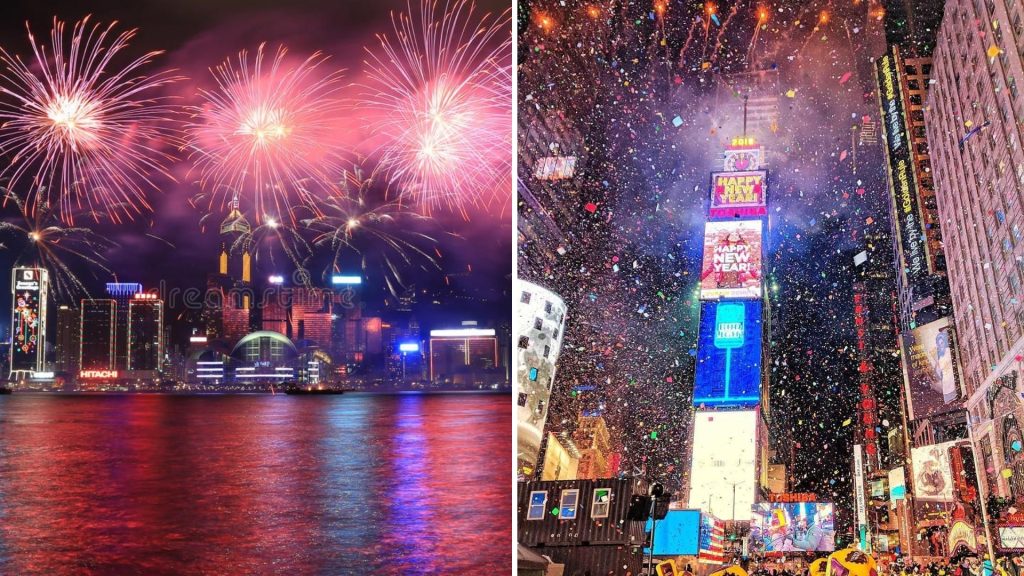
The stroke of midnight is the universal climax of New Year’s Eve. While the moment is shared, how it’s marked varies spectacularly.
- Watch the Ball Drop: Perhaps the most televised New Year celebration in the world, the descent of the glittering ball in New York City’s Times Square is a modern tradition watched by over a billion people. It symbolizes the countdown to new possibilities.
- Watch a Firework Show: From the dazzling over Sydney Harbour to the bursts of color above the Brandenburg Gate, fireworks are a global language of joy. Their loud noises and bright lights are historically meant to scare away evil spirits, making way for a pure start.
- Sing ‘Auld Lang Syne’: As the clock strikes twelve, many English-speaking countries link arms and sing this Scottish poem set to music. Its title translates to ‘for old times’ sake’, beautifully bridging nostalgic farewell with hopeful beginnings.
- Bang Pots and Pans: In cities like Montreal and across Latin America, you’ll hear a tremendous clatter at midnight. Families and neighbors step outside to bang pots and pans with spoons. This riotous noise is a folk ritual to drive away negative energy and welcome the new year with a clean slate.
2. Edible & Financial Traditions
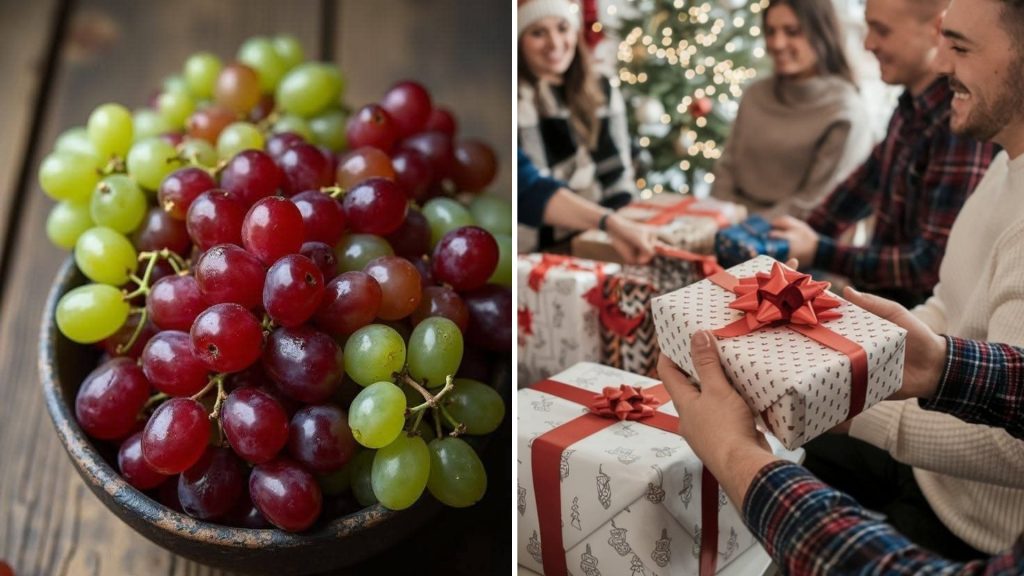
Many cultures believe you can quite literally consume or exchange your way to a prosperous year ahead.
- Eat 12 Grapes: As the clock chimes twelve in Spain and much of Latin America, the challenge is on. Participants must eat 12 grapes, one on each chime to secure 12 months of good luck. Succeeding without chocking is the first triumph of the year!
- Gather Round Items: New Year’s tables are set with symbolic foods. In Italy, lentils resemble coins, promising wealth. In the American South, black-eyed peas and greens represent coins and dollar bills. Filipinos displays 12 round fruits for prosperity, while Germans savor pork and herring for progress and abundance.
- Give the Gift of Money: Gifting cash is a direct wish for financial fortune. In China, money is placed in a red envelope and given to children and unmarried relatives. In Scotland, ‘handsel’ gifts of money are given on the first Monday of the new year for luck.
- Exchange a New Year Gift: Beyond money, the act of giving any New Year gift like Scottish shortbread, or small tokens in Russia, symbolizes a wish for generosity and sweetness in the year to come.
3. Stepping into the New Year Right
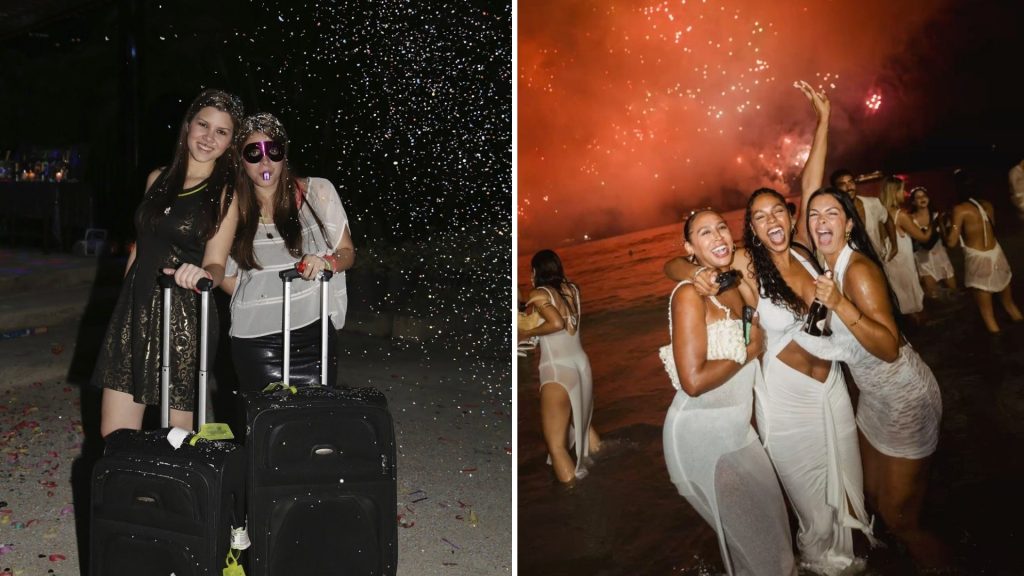
The first actions of the year are believed to set the tone for the next 365 days.
- Step into the New Year Right: In Scotland and parts of England, the ‘first-footer’, the first person to cross your threshold after midnight is crucial. A tall, dark-haired man bearing gifts like coal, salt, or whisky is considered the luckiest omen.
- Walk Through the House: In Colombia, those wishing to travel take an empty suitcase and walk through the house or around the block. In Ecuador, walking around the block with a suitcase is said to bring a year full of voyages.
- Dress in White: On the beaches of Brazil, millions dress in honor Yemanja, the goddess of the sea, and to attract peace and purity for the new year.
- Wear Something Red: In China and other Asian cultures, wearing something red is essential. The vibrant color symbolizes luck, vitality, and wards off evil spirits and misfortune.
- Make a Leap: At midnight in Denmark, people literally make a leap off their chairs, jumping into January. This playful act symbolizes leaving the old year’s troubles behind and leaping toward new opportunities.
4. Cleansing & Renewal Rituals
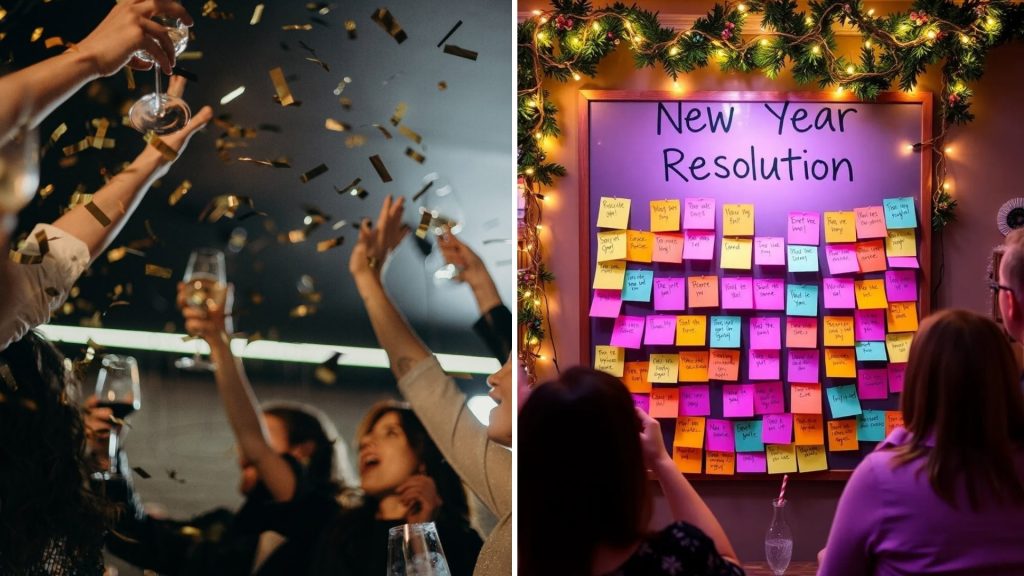
Before welcoming the new, many traditions focus on actively releasing the past.
- Burn Effigies: Across Ecuador and other parts of Latin America, communities create Anos Viejos effigies representing the older year, often modeled on pop culture figures or politicians. At midnight, they joyfully burn effigies in the street, symbolically incinerating past hardships and regrets.
- Hang an Onion on Your Door: On New Year’s Day in Greece, families hang an onion on their door as a symbol of rebirth and growth. The onion, with its ability to sprout anew, represents the family’s resilience and hope for regeneration in the year ahead.
- Host a New Year’s Eve Party: The universal social ritual of hosting a New Year’s Eve party is, in essence, a communal cleanse. We gather with loved ones to share food, laughter, and memories, collectively closing one chapter before opening the next.
- Make a New Year’s Resolution: This personal promise for self-improvement is an ancient practice. The Babylonians are said to be the first, making promises to their gods. Today, the act of reflection and goal-setting is a mental and spiritual cleanse for millions.
5. Scotland’s Hogmanay
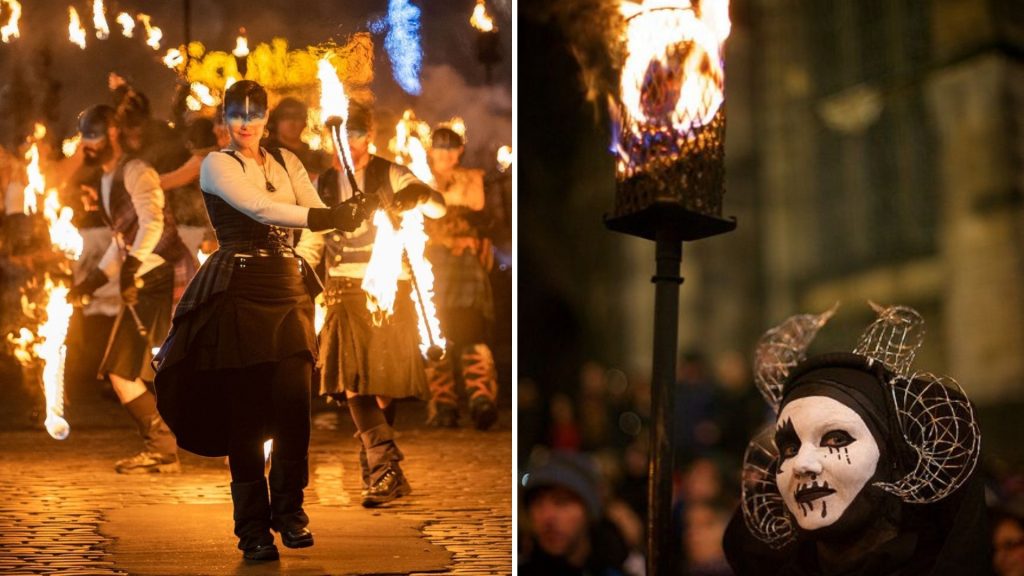
No exploration of New Year celebrations is complete without a deep dive into Hogmanay, Scotland’s world-famous, multi-day festival that often overshadows Christmas.
- Celebrate Hogmanay: Rooted in Viking winter solstice celebrations, Hogmanay is a spirited, often chaotic, and deeply communal festival. Its famous Edinburgh street party draws thousands, but local traditions are its heart.
- First-Footing Revisited: As mentioned, the ‘first-foot’ is central. The ideal first-footer brings symbolic gifts coal for warmth, shortbread for food, salt for flavor, and whisky for good cheer.
- Fire Ceremonies: Fire is a purifying element in Hogmanay. The most dramatic is the Stonehaven Fireballs Festival, where locals swing massive, flaming balls of wire and tar above their heads as they parade through the town, creating a river of fire to cleanse the path for the new year.
Cheers to New Beginnings
Around the world, people celebrate the New Year in many different ways. But all these traditions from eating grapes to banging pots share the same hope. They help us say goodbye to the old year and welcome the new one with good luck, happiness, and fresh starts. No matter where you are, the New Year is a time for hope and new beginnings.