The field of Artificial Intelligence is moving at a breath-taking pace. For anyone looking to understand machine learning, deep learning, and the practical applications of AI, YouTube has become an indispensable, free university. However, with countless channels available, finding high-quality, structured, and accurate information about AI can be overpowering. To ease your learning journey, I’ve listed ten exceptional YouTube channels. On distinct subjects for well-researched, factual, and educational content.
1. 3Blue1Brown
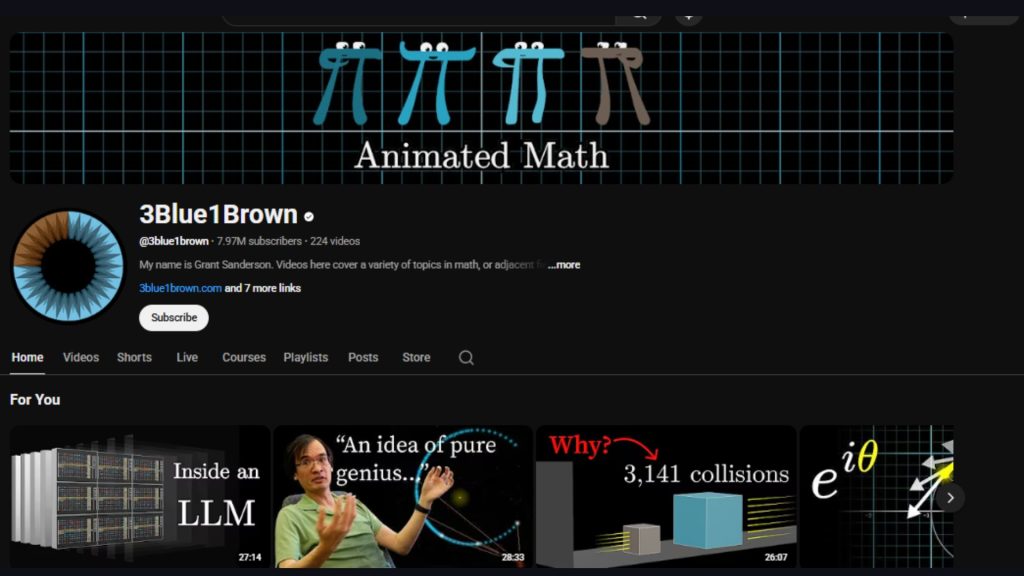
3Blue1Brown is arguably the most crucial starting point for building foundational intuition. It’s created by Grant Sanderson. This channel specializes in visual explanations of complex mathematical concepts. His “Neural Networks” playlist is a gem, which uses decent animation to demystify how neural networks learn. He covers topics like gradient descent and backpropagation from a visual, intuitive perspective. Before getting to learn to code, understanding these core concepts here will make every other resource more accessible.
2. StatQuest with Josh Starmer

Machine learning is built on statistics and data science principles. StatQuest excels at making these most-daunting topics approachable and clear. Josh Starmer breaks down algorithms like Random Forests, Support Vector Machines, PCA, and linear regression into bite-sized, animated videos. His gentle and friendly approach combined with thorough explanations of the underlying math, fills the critical gap between theory and application. It’s the perfect channel to solidify your understanding of the models that power AI.
3. Andrej Karpathy
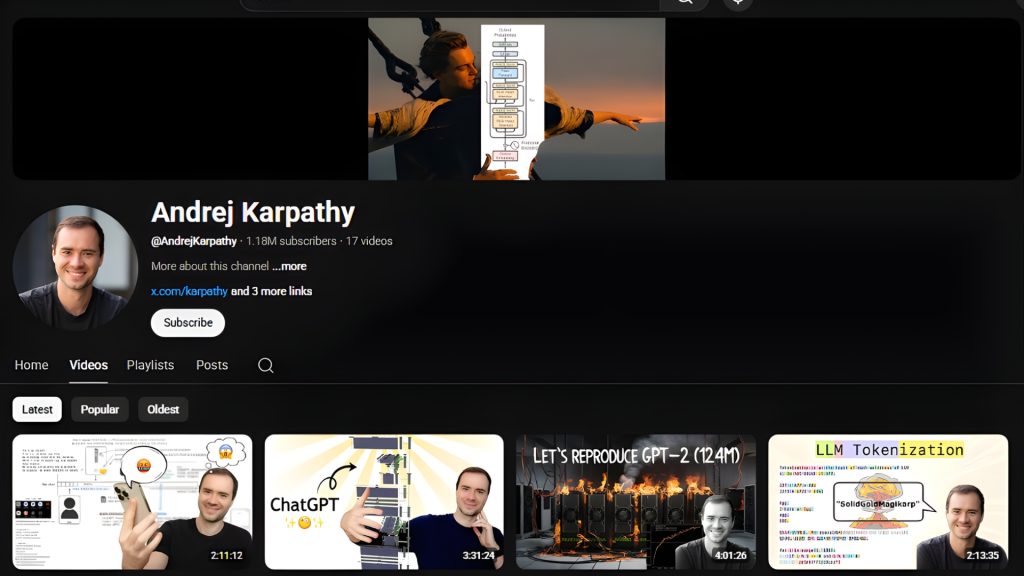
For a direct line to the latest AI development, you can follow Andrej Karpathy, the former Director of AI at Tesla and a key figure at OpenAI. His video named, ‘Let’s build GPT from scratch’ is a legendary tutorial, walking you through coding a Generative Pre-trained Transformer. His content is technical, covers some programming knowledge (Python, PyTorch), but offers unmatched insight from one of the industry’s leading practitioners itself.
4. sentdex (Harrison Kinsley)
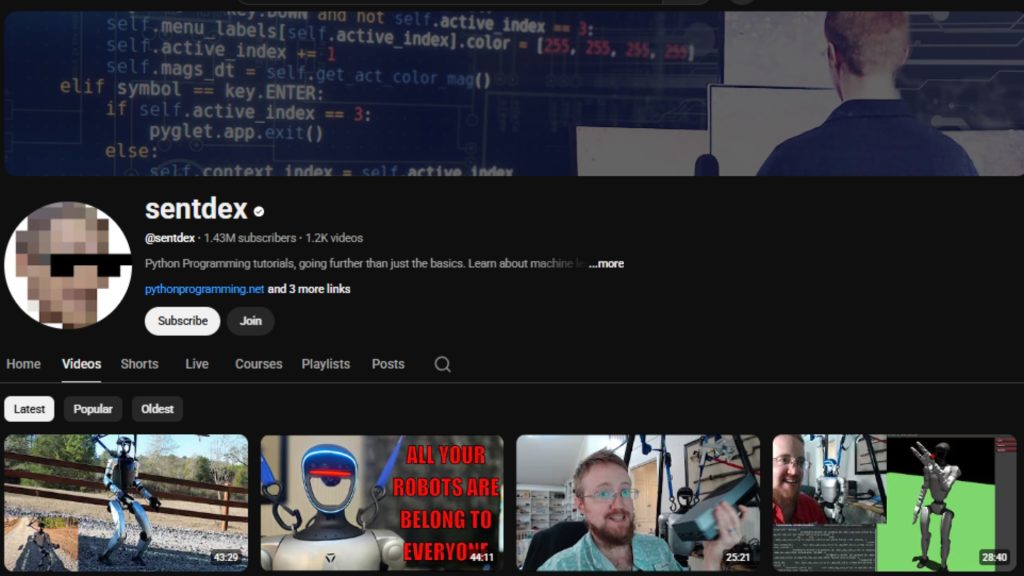
If your goal is to build AI projects with Python, sentdex has a good collection. Harrison Kinsley focuses on practical application. He offers extensive tutorials on machine learning, deep learning, reinforcement learning, and computer vision using libraries like TensorFlow, PyTorch, and OpenCV. His project-based approach (to create chatbots to training self-driving car AIs in simulation) strengthens your learning by doing. The content is thorough, well-paced, and excellent for developers who want hands-on experience.
5. Two Minute Papers
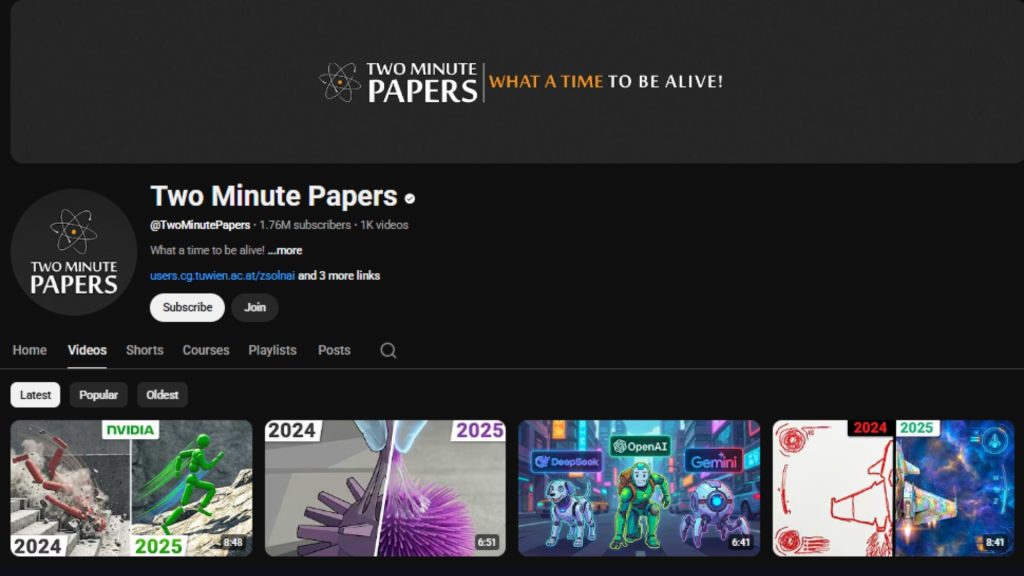
To stay up to date with AI research is a challenge. Two Minute Papers, which is hosted by Dr. Karoly Zsolnai-Feher, brilliantly summarizes ground-breaking academic papers in short, engaging videos. He explains the real innovation, shows stunning visual results (especially in graphics and generative AI), and discusses the potential impact in an easy-to-grasp way. This channel is your weekly digest to the new possibilities of AI. All in about two minutes per paper.
6. MIT OpenCourseWare
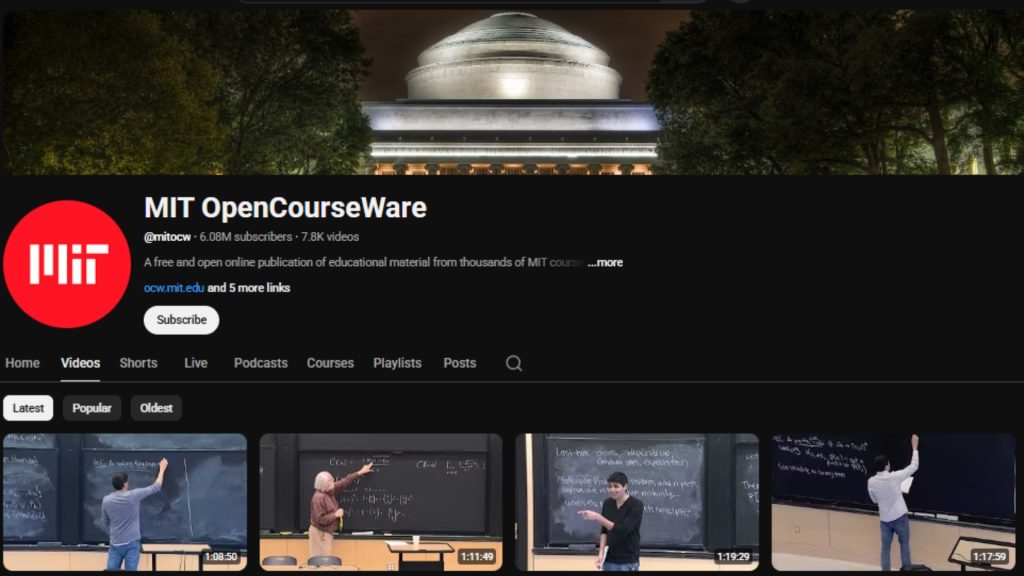
For a formal, university-style education, MIT OpenCourseWare provides full lecture series from one of the world’s top institutions. Their playlists for ‘Introduction to Deep Learning’ and the classic ‘Artificial Intelligence’ courses are invaluable. You get access to world-class professors like Lex Fridman (who taught MIT’s intro to deep learning course) and Eric Grimson. They deliver structured and comprehensive curriculum. It’s the closest you can get to an MIT education without the tuition.
7. Henry AI Labs
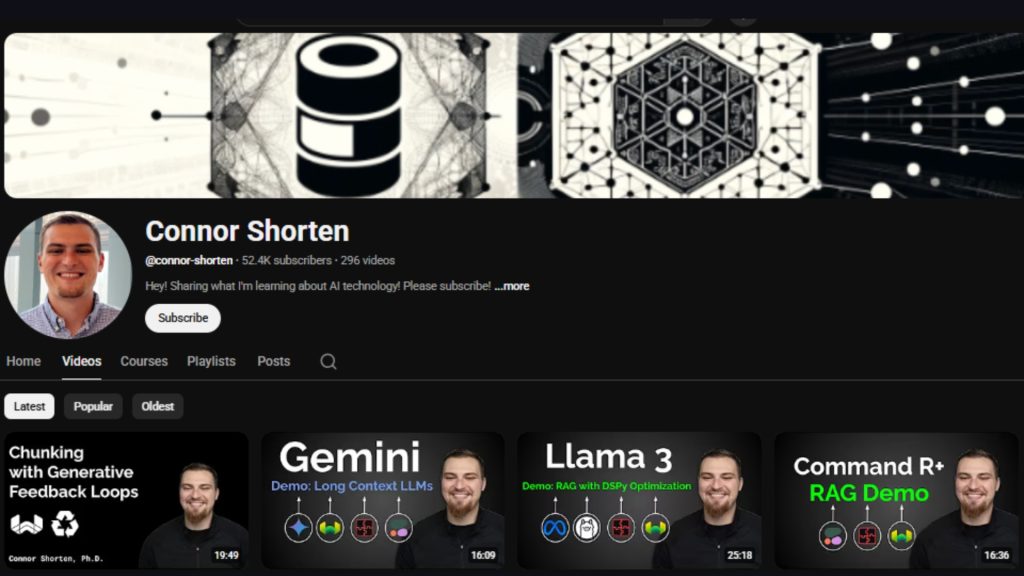
This channel focuses on explaining novel AI research papers through clear visuals and concise commentary. Henry AI Labs dives into specific architectures and techniques, like different transformer variants, efficient neural networks, and meta-learning. It’s an excellent resource for intermediate learners who want to move beyond introductory tutorials and understand the nuanced advancements driving the field forward.
8. AssemblyAI
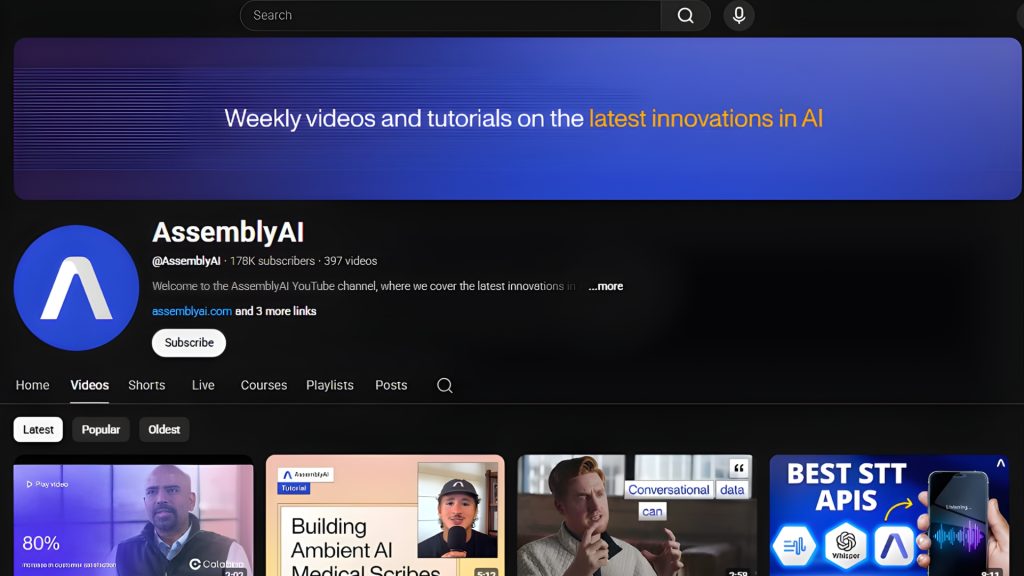
AssemblyAI is a YouTube channel which is focused heavily on the practical and production sides of AI. It runs an outstanding educational channel. They produce in-depth, up-to-date tutorials on large language models (LLMs), speech recognition, and audio processing. Their detailed guides on LLMs, transformers, and deploying models are technically sound and relevant to real-world applications.
9. Yannic Kilcher
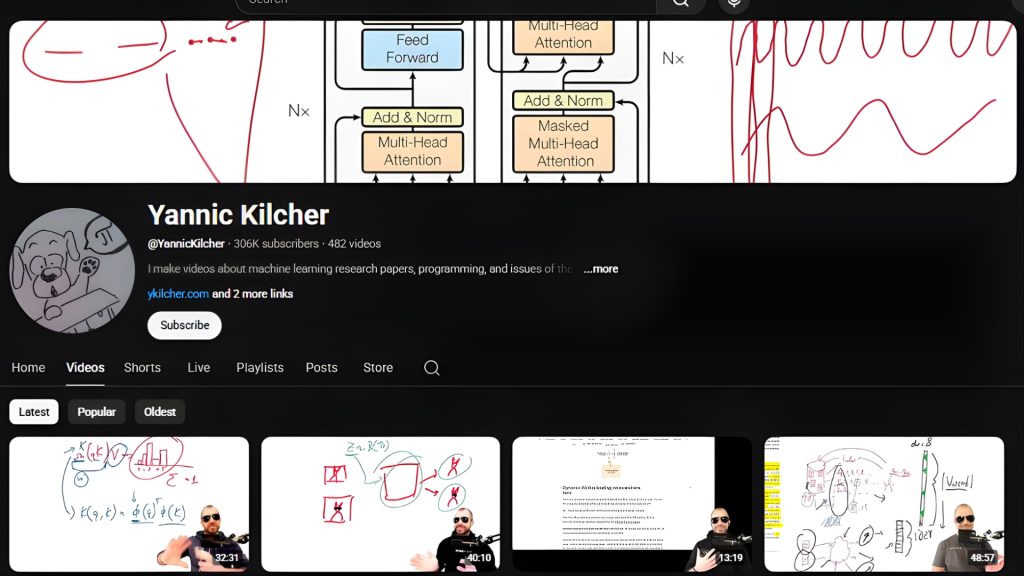
For those who are ready to engage directly with research, Yannic Kilcher provides ….. paper reviews and technical discussions. He goes through AI research papers line-by-line, explaining the methodology, math, and significance. The content is advanced and concludes a firm baseline knowledge. But it’s an exceptional resource for graduate students, researchers, or dedicated enthusiasts who want to develop the skill of reading and critiquing academic literature.
10. DeepLearning.AI
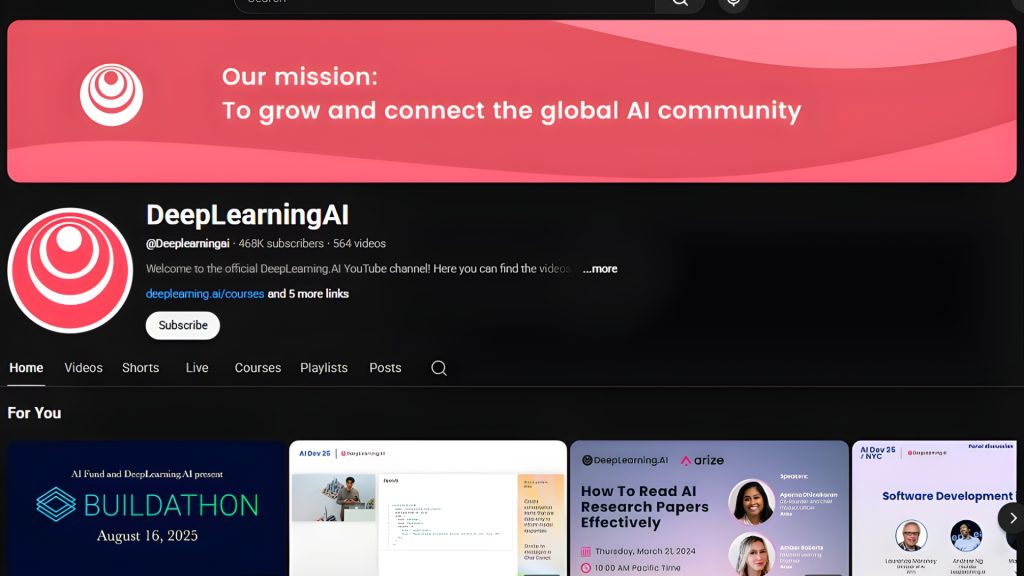
The DeepLearning.AI YouTube channel supplements their world-renowned Coursera courses. Andrew Ng, a pioneer in online AI education, features short lessons, interviews with industry leaders, and explanations of key concepts from Ng himself. The content is professionally produced, impeccably accurate, and focuses on building a clear mental framework for AI concepts. It’s a trustworthy source for pedagogically sound explanations.
How to Use These Channels Effectively
Beginners should prioritize 3Blue1Brown and StatQuest for intuition, then move to sentdex or DeepLearning.AI for practical skills. You should use Two Minute Papers to stay inspired about the future and then MIT OCW for structured theory. As you advance, channels like Karpathy, Henry AI Labs, and Kilcher will become essential.
Remember, consistent, active learning is key. Watch a video, then try to implement the concept in code or explain it in your own words. The field of AI is vast, but with these ten channels as your guides, you have a direct pipeline to the knowledge, intuition, and skills needed to navigate it successfully.