Table of Contents
Do you feel tired all the time? Do you have weakness, numbness, or a tingling feeling in your hands and feet? Then, it could be a sign that you are lacking B12. Vitamin B12 helps your body make red blood cells, keep your nerves healthy, and make DNA. Your body can store B12 for a long time, so a deficiency can take years to develop.
The reassuring part is that B12 deficiency can be treated. The clear reason behind your low B12 level decides the treatment. Let’s understand it in simple terms.
What is B12?

B12, also called vitamin B12, is a vitamin your body needs to work properly. It helps with
- making red blood cells
- keeping your nerves healthy
- making DNA
- helping your body use energy properly
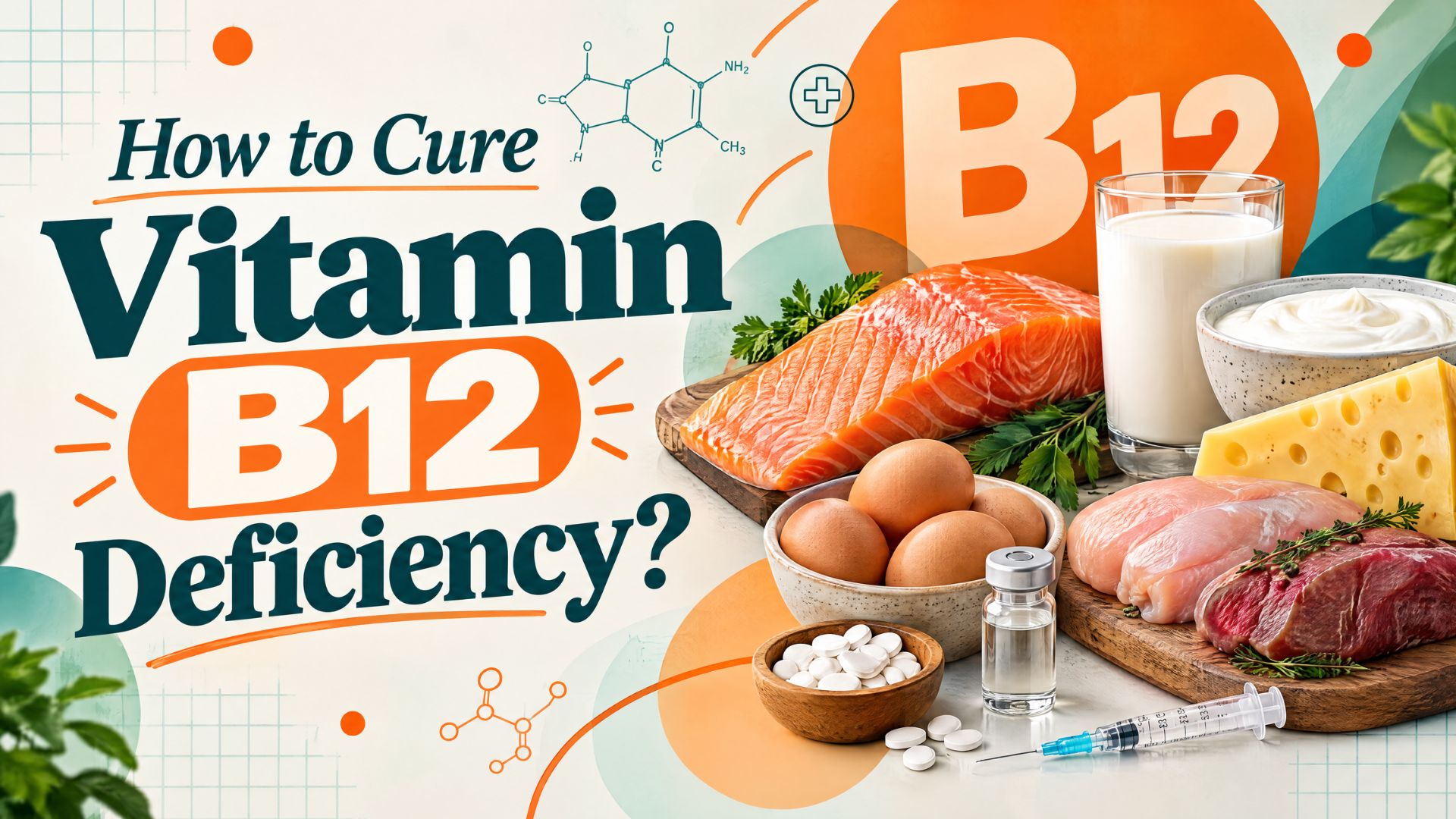
Adults need about 2.4 micrograms of vitamin B12 each day. Pregnant and breastfeeding women need more. B12 is found naturally in foods like
- fish
- meat
- chicken
- eggs
- milk
- cheese
- yogurt
Plant foods do not naturally contain B12. People who do not eat animal foods can get B12 from fortified foods and supplements.
What is B12 Deficiency?

B12 deficiency means your body does not have enough vitamin B12. A low B12 level can cause so many symptoms. You may experience
- tiredness
- weakness
- pale skin
- loss of appetite
- weight loss
- a sore or swollen tongue
- numbness
- tingling in your hands or feet
- trouble with balance
- memory problems
- confusion
- mood changes
Some people can have B12 deficiency without having anaemia. Nerve problems can also happen. If B12 deficiency is left untreated for a long time, nerve damage may become permanent. This is why it is important to get medical help if you have symptoms.
#Read Also: Vitamin B12 Deficiency
What Causes B12 Deficiency?

Eating too little B12 is only one possible cause. Vitamin B12 deficiency occurs when the body does not get or absorb enough vitamin B12 to meet its needs. If it persists, it can affect red blood cell formation, energy levels, and normal nerve function.
1. Your diet does not have enough B12
People who eat little or no meat, fish, eggs, or dairy products may not get enough B12. Vegans and some vegetarians may need fortified foods or B12 supplements to get enough of the vitamin.
2. Your body cannot absorb B12 properly
Your stomach needs a substance called intrinsic factor to absorb B12. Some stomach and digestive problems can stop your body from absorbing enough B12. Conditions like coeliac disease and Crohn’s disease can also affect B12 absorption. Some people may develop B12 deficiency after certain stomach or bowel surgeries.
3. Some medicines can lower B12
Some medicines may affect B12 levels when used for a long time. Metformin and some medicines used to lower stomach acid are examples. Do not stop a prescribed medicine on your own. Talk to your doctor if you think your medicine may be affecting your B12 level.
4. Nitrous oxide use
If you use nitrous oxide, sometimes called laughing gas, it can affect B12 in the body. Regular recreational use can lead to B12 problems and nerve damage.
How is B12 Deficiency Diagnosed?
A doctor can check your B12 level with a blood test. The doctor may also check your blood count and other markers to understand what is causing the problem. Your doctor can ask about
- your diet
- your symptoms
- medicines you take
- digestive problems
- previous stomach or bowel surgery
It is very important to find the cause matters because treatment can be different for different people.
How to Increase B12 Levels?
There are several ways to raise B12 levels. Again, every treatment or relevant diet would start only after the correct reason is discovered.
1. Eat foods rich in B12

If your diet is low in B12, you can add B12-rich foods to get help quick and healthy breakfast ideas. Good choices would include
- eggs
- milk
- yogurt
- cheese
- fish
- chicken
- meat
People who follow a vegan diet can look for foods with added B12. These are called fortified foods.
2. Take B12 supplements

B12 supplements can help raise your B12 level. They are available as tablets and other forms. There are certain common types of B12 like
- Cyanocobalamin
- Methylcobalamin
- Adenosylcobalamin
Your doctor or pharmacist can help you pick a suitable product. Food and supplements would be enough for some people. They might not be enough for people who cannot absorb B12 properly.
3. B12 injections

Some people need B12 injections. Injections can be needed if your body has trouble absorbing B12. They can also be used when there are serious nerve symptoms. People with certain stomach or bowel problems can need B12 injections for a long time. Some may even need them for life.
What is the Right B12 Dosage?
The amount needed to prevent a deficiency is different from the amount used to treat one. Adults normally need about 2.4 micrograms of B12 per day from their diet. Treatment doses can be much higher. For example, NICE recommends at least 1,000 micrograms per day for some people who need oral B12 treatment because of poor absorption. Do not assume that taking a very large dose is the best option. Ask a doctor or pharmacist about the right dose for you.
How Long Does It Take to Fix B12 Deficiency?
It depends on the person. Some symptoms may start getting better within a couple of weeks. Other symptoms can take several months to get better. Nerve symptoms can take longer than other symptoms. If your symptoms do not get better or become worse after treatment, talk to your doctor.
Can Food Alone Fix B12 Deficiency?
Sometimes. If your B12 deficiency is caused by not getting enough B12 from food, changing your diet may help. You can also need a supplement. But food alone can’t fix the problem if your body can’t absorb B12 properly. For example, people with certain stomach problems may need B12 tablets or injections even if they eat foods rich in B12.
Are B12 Supplements Safe?
B12 is generally considered safe, even at high doses. The body does not store all the extra B12 it takes in. The National Institutes of Health has not set an upper daily limit for B12 because it has a low risk of causing harm in healthy people. Still, taking supplements for a long time without knowing why your B12 is low is not a good idea. A blood test can help find out if you actually have a deficiency.
Can B12 Deficiency Come Back?
Yes. B12 deficiency can come back if the cause is still there. For example, someone who does not get enough B12 from their diet may need to take supplements for a long time. Someone with a condition that stops B12 absorption may need regular injections. If your deficiency was caused by a short-term diet problem, your doctor may decide that long-term treatment is not needed.
When should you see a doctor?
Talk to a doctor if you have symptoms like
- extreme tiredness
- weakness
- numbness
- tingling in your hands or feet
- problems with balance
- memory problems
- a sore tongue
- unexplained anaemia
Do not ignore numbness, tingling, or balance problems. These can be signs of nerve problems caused by B12 deficiency.
B12 Deficiency is Treatable
If you are not getting enough B12 from food, eating more B12-rich foods and taking B12 supplements can help. If your body can’t absorb B12 properly, you may need a higher dose or B12 injections. The best way to know what you need is to get a blood test and speak with a healthcare professional. Do not guess your B12 dosage based on someone else’s treatment. Always take a test before starting your medication.