Table of Contents
Hard water is a common problem in Indian homes, especially in areas where water comes from borewells, tankers, or groundwater sources. You may notice white marks around the tap, scale on the showerhead, soap that does not lather properly, or deposits around your geyser and bathroom fittings. If you are dealing with these problems, a hard water filter may sound like the obvious answer. But there is a catch, that is, not every product sold as a hard water filter actually removes the minerals responsible for water hardness.
This matters when you are shopping for a filter for your bathroom taps. Some products are made to remove chlorine or sediment. Others condition the water or target specific impurities. A water softener works differently and is designed to address calcium and magnesium, the minerals mainly responsible for hardness. So, before spending money on a filter, it is worth understanding what is actually in your water and what the product is designed to do.
What Is Hard Water?
Hard water contains dissolved minerals, mainly calcium and magnesium. These minerals can come from rocks and soil as groundwater moves through them. In India, this can be particularly relevant for homes using borewell or groundwater supplies. Tanker water can also have varied mineral content depending on its source.
The Bureau of Indian Standards’ IS 10500:2012 lists 200 mg/L as the acceptable limit for total hardness, measured as calcium carbonate (CaCO₃), and 600 mg/L as the permissible limit when no alternate source is available. You do not need to memorise these numbers to know if your bathroom has a hard-water problem. White deposits around taps, scale on fittings, and frequent buildup on showerheads are common signs that minerals are accumulating.
#Read Also: Hard Water Hair Damage with Simple Solutions
Why Does Hard Water Affect Bathroom Taps?
Notice what happens when a few drops of mineral-rich water dry on a tap. The water disappears, but some of the dissolved minerals can remain on the surface. After repeated use, those deposits can become noticeable.
You would see them around:
- Bathroom taps
- Bathroom mixer taps
- Showerheads
- Sink outlets
- Geyser fittings
- Glass shower panels
- Tiles around the bathing area
Hard water can also make soap react with calcium and magnesium, leaving soap deposits on surfaces. It can contribute to scale inside plumbing and water-heating equipment too. This is why people frequently start searching for a water filter for hard water after dealing with bathroom scales for months.
Is High TDS the Same as Hard Water?
No, and this is an important point for Indian buyers. TDS stands for total dissolved solids. It tells you roughly how much dissolved material is present in water, but it does not tell you exactly how much of that material is calcium and magnesium. Hardness is specifically related to minerals such as calcium and magnesium. So, a TDS meter can tell you about the dissolved-solids level, but a TDS reading alone cannot tell you the hardness of your water.
For example, two water samples can have similar TDS readings but different hardness levels because their dissolved minerals are not necessarily present in the same proportions. If your main problem is scale around bathroom water taps, getting the water tested for hardness is more useful than relying only on a TDS meter.
#Read Also: DRDO SWaDeS Water System Helps the Indian Army
Do You Need a Hard Water Filter or a Water Softener?
This is probably the most important question in the entire buying process. A filter and a softener do different jobs. A filtration system may target sediment, chlorine, taste, odour, or other specified substances. A water softener is designed to address hardness minerals. Ion-exchange softeners work by exchanging calcium and magnesium ions for sodium or potassium ions.
This is the standard softening method used in many residential systems. So, if your main complaint is white scale caused by hard water, do not assume a small tap filter or shower cartridge will remove the calcium and magnesium. You must read the product specifications carefully. If a product says it reduces chlorine, sediment, odour, or impurities, that does not automatically mean it softens hard water.
1. Tap-Mounted Hard Water Filter
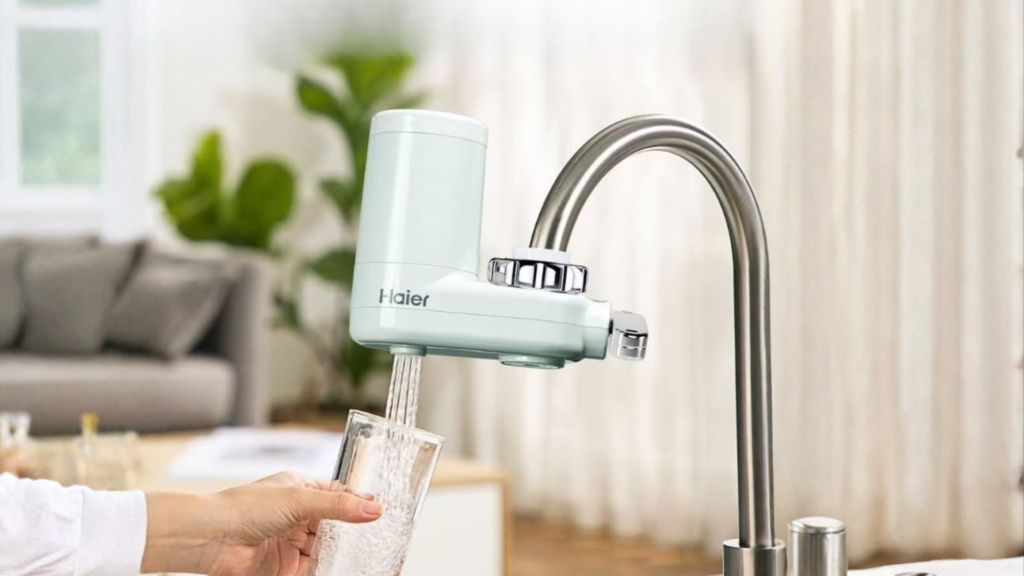
A tap-mounted filter attaches directly to your bathroom tap. This can be useful if you want treatment at one particular sink rather than changing the water supply for your whole home. For example, if only the tap in your attached bathroom needs treatment, a point-of-use system may be worth considering.
Before buying, check what the cartridge is designed to remove. A product marketed as a hard water filter may target specific impurities rather than remove hardness minerals. Also check the tap connection. Not every filter will fit every Indian faucet, especially if your bathroom has a designer tap or a non-standard outlet.
2. Inline Filter for Bathroom Taps
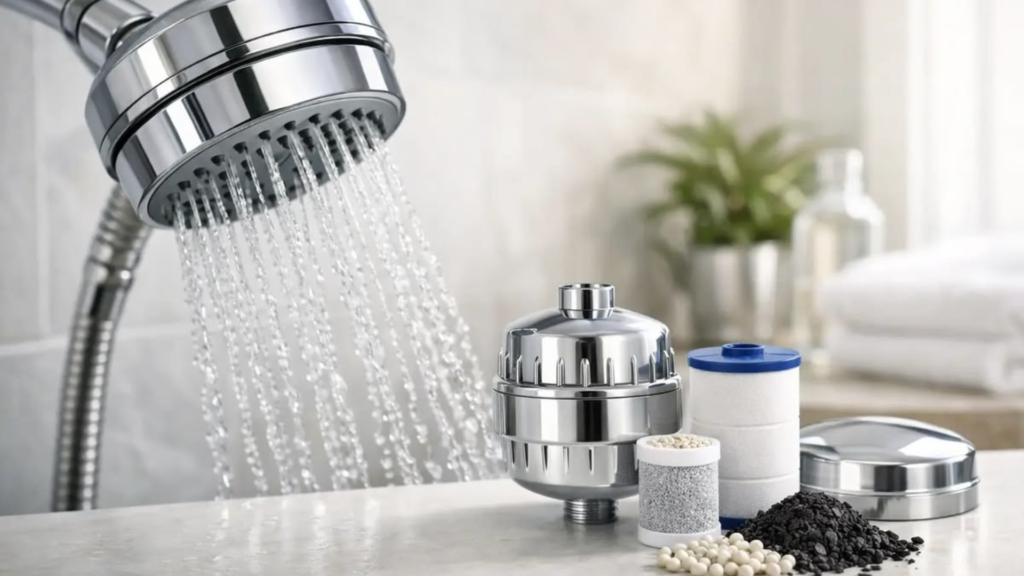
An inline filter sits along the water connection rather than directly on the end of the tap. This can work well if you do not want a bulky filter attached to the faucet itself. It may be suitable for some bathroom mixer taps, but compatibility needs to be checked before installation. Look at the inlet and outlet sizes and the type of connection required.
Again, pay more attention to the filter media and performance claims than the appearance of the product. If your goal is actual hardness reduction, look for a product specifically tested for that purpose.
3. Shower Head Filter for Hard Water
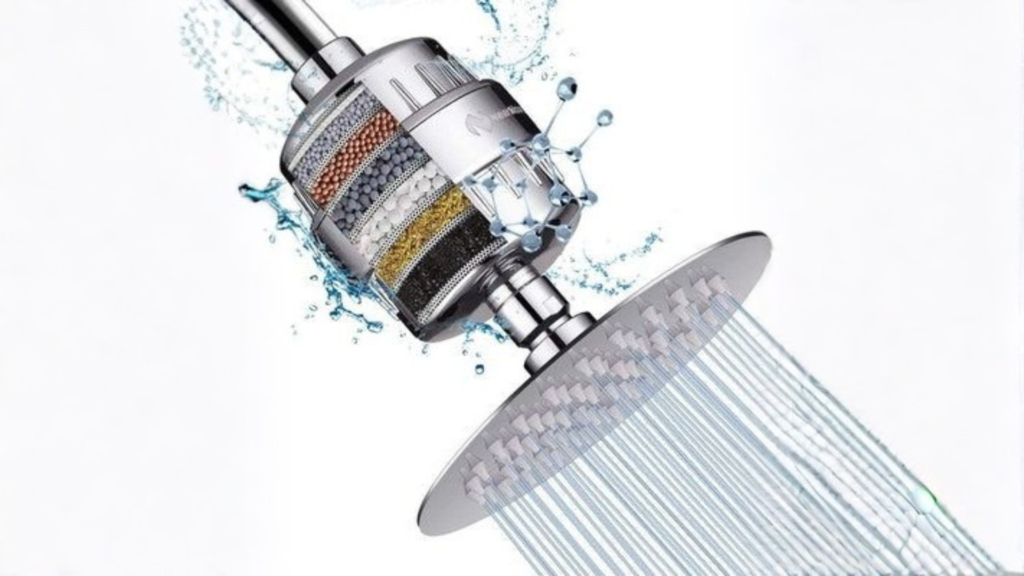
A shower head filter for hard water is among the most searched options for people dealing with hard water during bathing. But this category needs some caution. Many shower filters are designed mainly for chlorine and other specific impurities. They should not automatically be treated as water softeners.
This distinction is particularly important if your problem is heavy white scaling on the showerhead, bathroom fittings, or glass. Before buying a shower filter, check:
- What substances it is designed to reduce
- What filter media it uses
- Whether its performance has been independently tested
- How long the cartridge lasts
- Whether replacement cartridges are readily available in India
- Whether the connection fits your existing shower pipe
If hardness is the main problem, look for a genuine hardness-treatment claim rather than relying only on the words “hard water.”
4. Inline Shower Filter
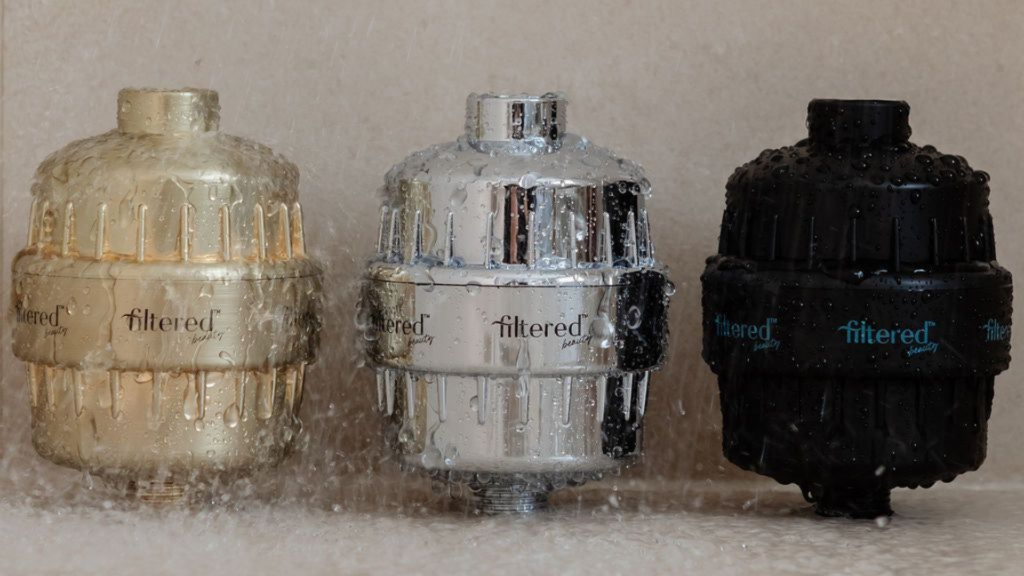
An inline shower filter sits between the water connection and the showerhead. This can be a convenient option if you already like your existing showerhead and do not want to replace it. It can work with many standard shower connections, but check the fitting size before ordering.
This type of filter can make sense for people who want point-of-use treatment in the shower. Just remember the difference between filtration and softening. If your bathroom has serious scales caused by calcium and magnesium, an inline filter may not provide the same treatment as a water softener.
5. Filter for a Tap Showerhead
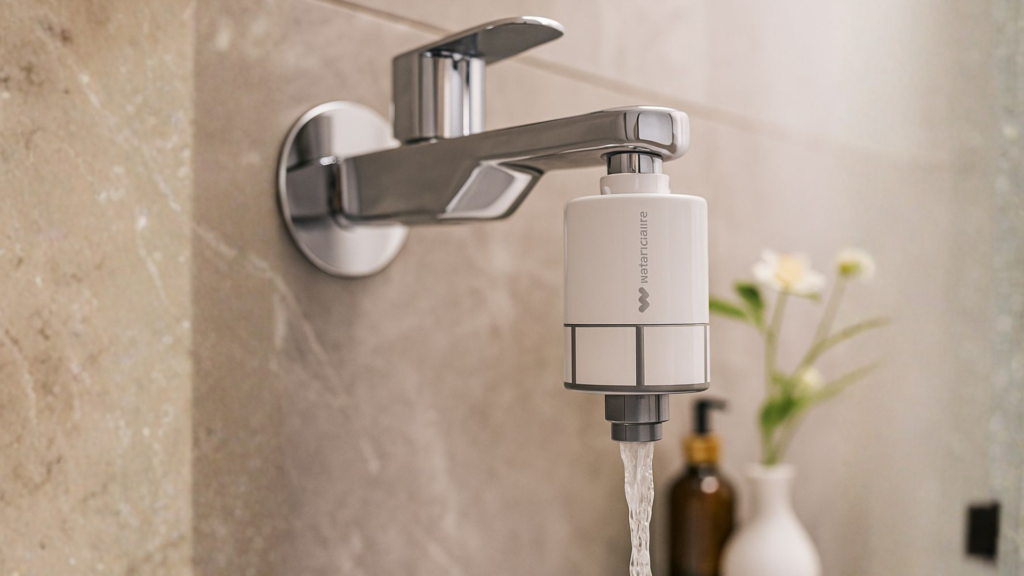
Some Indian bathrooms have a hand shower, health faucet arrangement, or a tap showerhead connected to the bathroom water supply. Compact filters may be available for different shower connections. These can be useful in rented homes because installation is generally simpler than changing the entire water supply.
However, check the connection carefully. Bathroom fittings vary, and you may need an adapter. Also check the actual filtration claim before buying. A compact filter can be useful for a specific contaminant, but size alone does not tell you how effective it is against hardness.
6. Water Softener for the Bathroom
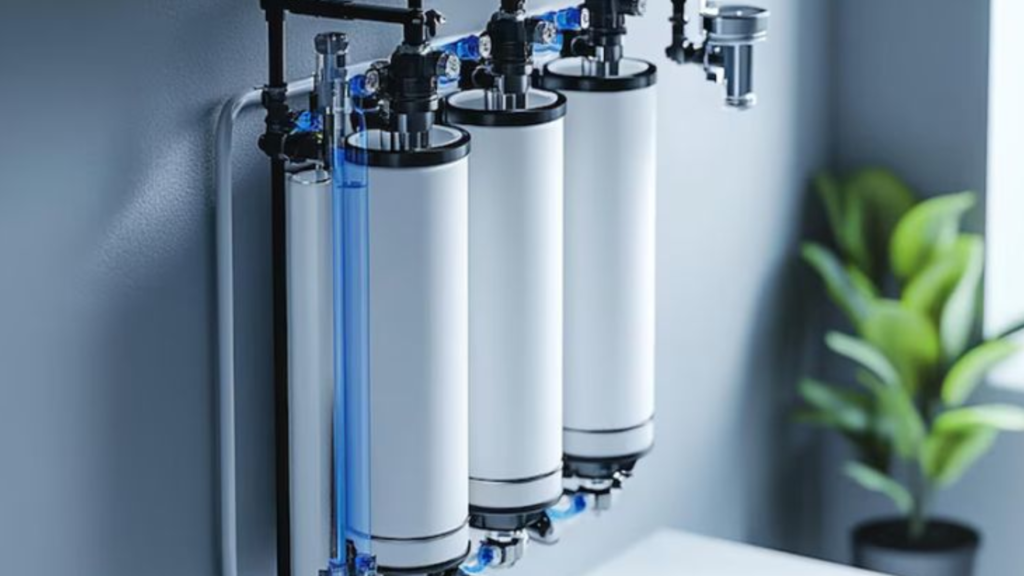
If your main problem is calcium and magnesium, a water softener is the more relevant solution. A conventional ion-exchange softener passes water through resin that exchanges calcium and magnesium ions for sodium or potassium ions. For an Indian home with severe hard water, this can make more sense than installing small filters on individual taps.
A softener can be installed at a suitable point in the plumbing system and can treat water going to multiple fixtures, depending on the setup and capacity. The downside is maintenance. Ion-exchange systems need regeneration and periodic servicing, and the operating cost depends on water usage, hardness, system size, and salt consumption.
7. Whole-House Hard Water Treatment
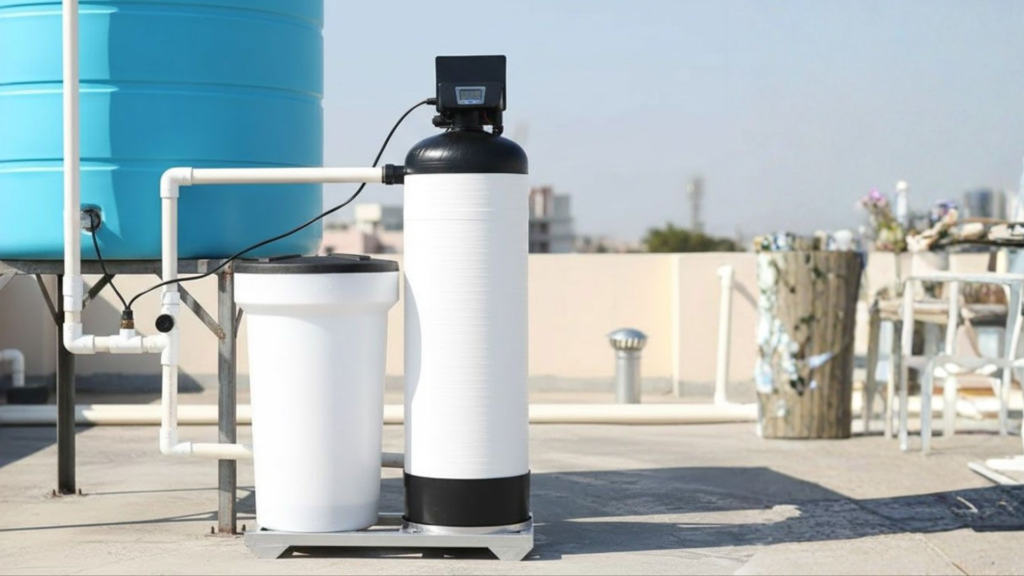
What if hard water is affecting every bathroom? You would notice scale on several bathroom water taps, deposits around the geyser, and buildup in other plumbing fixtures. In this situation, installing separate filters on every outlet may not be the most practical approach.
A whole-house treatment system can treat water before it reaches multiple points around the home. This can make sense for larger houses, villas, independent homes, and properties using groundwater. Before buying a whole-house system, get your water tested. You need to know the hardness level and ideally other relevant water-quality parameters too.
8. Shower Filter with Carbon Media
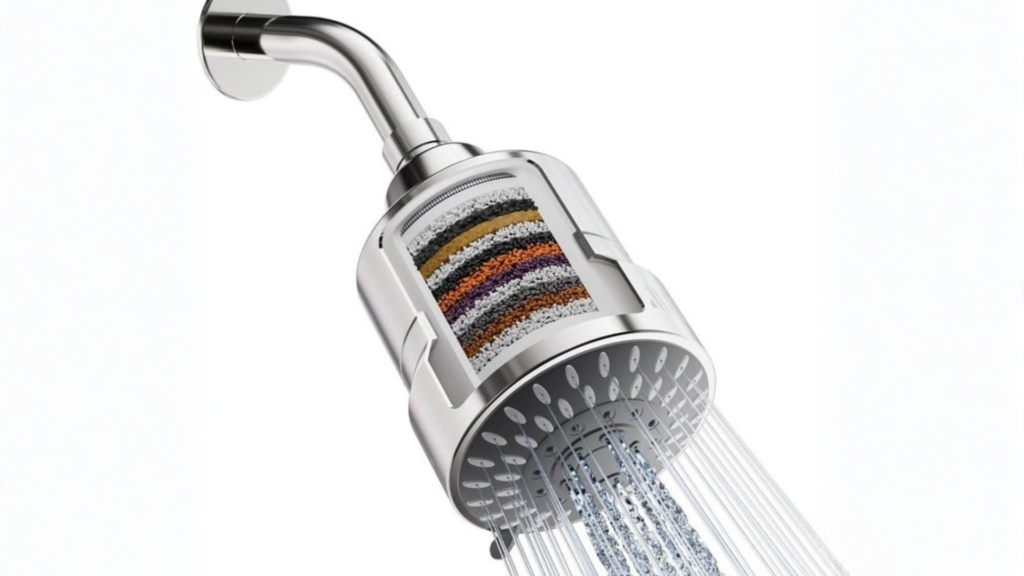
Activated carbon is widely used in filtration systems. It can target chlorine and certain organic compounds, depending on the design and testing of the filter. So, if chlorine is your main concern, a carbon-based shower filter may be worth considering.
But carbon filtration should not be treated as a guaranteed solution for calcium and magnesium hardness. This is a common area of confusion when people search for a water filter for hard water online. Check the exact performance claim before buying.
9. Showerhead with a Replaceable Cartridge
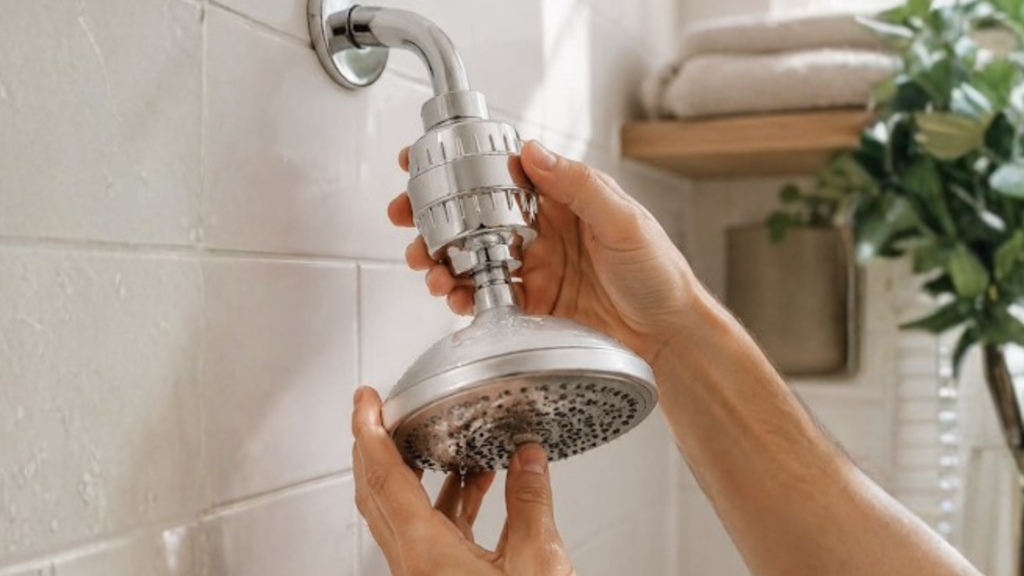
Some showerheads come with an integrated filter cartridge. The main advantage is convenience. You do not need a separate filter housing sitting between the shower pipe and showerhead.
If you are considering this type of product, check the cartridge replacement schedule and the availability of replacement cartridges in India. Also check the water-flow rating. A filter that restricts flow too much can make a shower less practical, especially in homes where water pressure is already modest.
10. Filter for Bathroom Mixer Taps
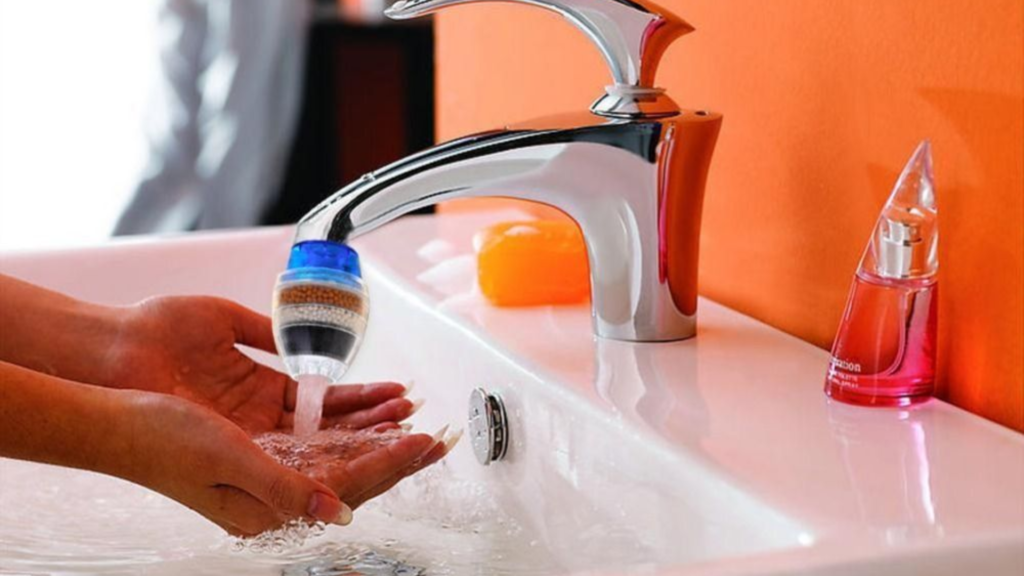
Bathroom mixer taps can have different connection arrangements, so compatibility is especially important here. If you are planning to connect a filter beneath the basin, check the inlet and outlet specifications before buying. Also check whether the filtration system is designed for hot water.
Many filters are intended for cold-water lines. If you connect the wrong type of filter to a hot-water supply, the cartridge or housing may not be suitable for the temperature. For homes with a geyser connection, this is something worth checking before installation.
11. Point-of-Use Filter for One Bathroom
You would not need a whole-house system. Suppose you live in an apartment and the hard-water issue is particularly noticeable in your bathroom. A point-of-use solution may be more practical.
This can be installed for a specific tap or shower rather than treating every outlet in the property. It is also worth considering for tenants who cannot make major plumbing changes. The key is to match the treatment method to the actual problem.
12. Compact Hard Water Treatment for Apartments
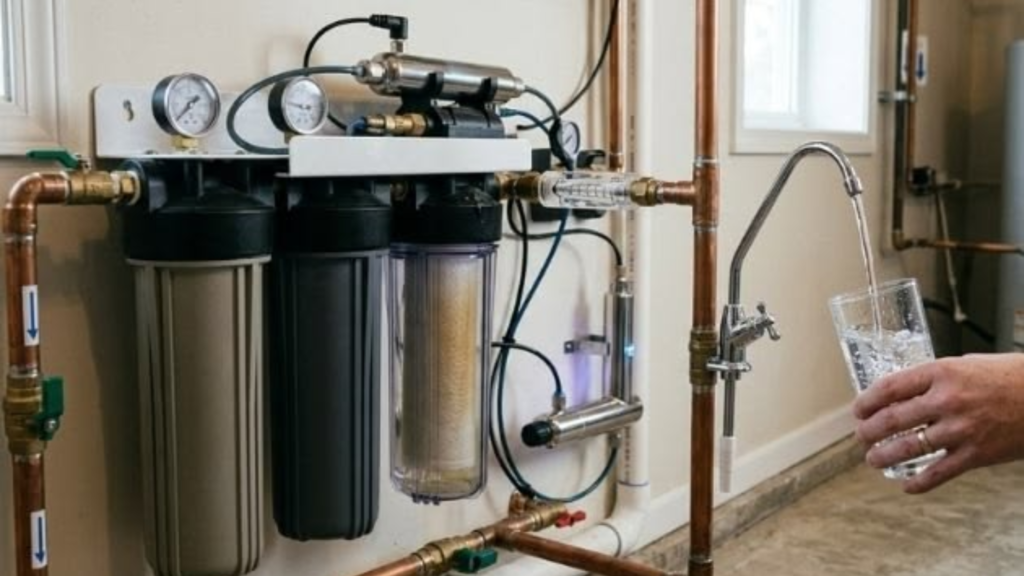
Apartment living comes with its own limitations. You would have water supplied by the building, a common overhead tank, or a combination of municipal and other sources. You may also have limited space around the bathroom fittings.
A compact treatment system can make sense in this situation. Before buying, check:
- Available installation space
- Water pressure
- Pipe size
- Filter replacement cost
- Cartridge availability
- Maintenance requirements
- Actual hardness-treatment claim
Do not buy purely based on the product’s TDS claim if your main concern is hardness.
13. Bathroom Water Treatment for Borewell Homes
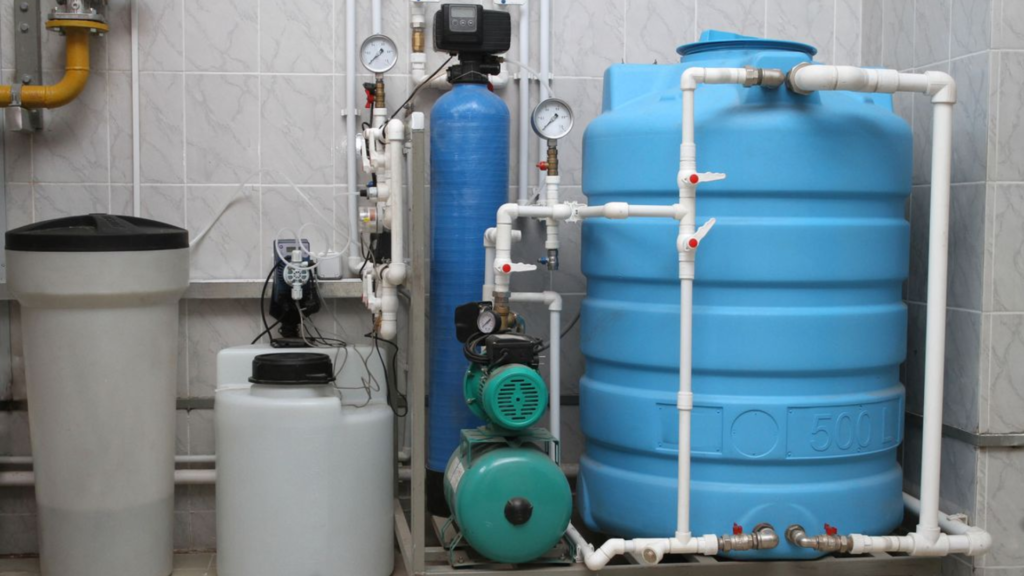
Borewell water deserves special attention. Groundwater can pick up minerals as it moves through rock and soil, so some borewell-fed homes experience substantial hardness. If your home uses borewell water, test the water rather than guessing.
You can find that hardness is the main issue, or you may find other parameters that need attention too. A proper water test can help you decide if you need a hard water filter, a softener, or another type of treatment.
What Should You Look for in a Hard Water Filter?
Once you know your water quality, you should look at the product specifications.
1. Check What the Product Actually Removes
Do not stop at the words “hard water filter.” Look for a specific statement about what the product reduces or removes. Is it designed for calcium and magnesium? Chlorine? Sediment? Iron? Other contaminants? These are different treatment goals.
2. Check the Hardness Claim
If the product claims to remove or reduce hardness, check how the manufacturer defines that claim. Look for testing information rather than relying on a generic statement printed on the packaging.
3. Check Cartridge Life
A filter may look affordable at first, but the running cost can be higher if the cartridge needs frequent replacement. Check the expected cartridge life and replacement price.
4. Check Water Flow
This matters particularly for shower filters. A filter that restricts water flow can be frustrating in a bathroom where pressure is already low.
5. Check Fitting Compatibility
Before buying a filter for bathroom taps, check the thread size and connection type. This is especially important for imported products and designer bathroom fittings.
6. Check Service Availability
For a larger softener or whole-house system, service availability matters. Look for a company with service coverage in your city and access to replacement parts. A technically good system can become inconvenient if you cannot get the resin, cartridge, valve, or other replacement components when needed.
How Much Water Hardness Is Too High for Bathroom Taps?
BIS IS 10500:2012 lists total hardness of 200 mg/L as CaCO₃ as the acceptable limit, with 600 mg/L as the permissible limit in the absence of an alternate source. These are drinking-water standards, so they should not be treated as a direct “bathroom filter threshold.”
Still, they provide a useful reference when you get your water tested. If your test report shows a high hardness level and you are seeing substantial scale around taps and shower fittings, it is worth discussing a suitable softening system rather than buying a generic tap filter.
Differentiate Hard Water Filter vs Water Softener
| If your main problem is… | Consider… |
|---|---|
| Calcium and magnesium hardness | Water softener |
| Heavy scale on taps and fittings | Hardness treatment/softener |
| Chlorine in shower water | Suitable shower filter |
| Sediment or particles | Sediment filter |
| Hard water throughout the house | Whole-house softener/treatment |
| Problem at one bathroom tap | Point-of-use treatment |
| Unknown borewell water quality | Water testing first |
What About RO for Hard Water?
RO can remove dissolved salts and minerals, including calcium and magnesium, but using an RO system simply to treat shower or tap water is a different question. RO systems generate reject water and need appropriate installation and maintenance. They are also primarily associated with drinking-water treatment in Indian homes.
For a bathroom where the main issue is hardness, a dedicated softening system may be more appropriate than installing an RO system solely for bathing. The right solution depends on the water quality and the purpose of treatment.
How to Deal with Existing White Deposits on Bathroom Taps
A new filter will not magically remove deposits already sitting on your fittings. For existing scales, clean the tap or shower fitting according to the manufacturer’s instructions and the material of the surface. Be careful with strong acids or abrasive cleaners, particularly on plated bathroom fittings.
They can damage the finish. Once the existing deposits have been cleaned, treating the source of the hardness can help limit future buildup. This is particularly useful for bathroom mixer taps, showerheads, and other fittings where mineral deposits can become noticeable.
Which Hard Water Filter Is Best for an Indian Home?
There is no single answer. If you live in an apartment and only want treatment at one bathroom tap, a point-of-use system may be enough. If you are mainly concerned about chlorine during showers, a suitable shower filter may make sense.
If your borewell water is causing heavy scale throughout the house, a proper water softener is worth investigating. If several bathrooms are affected, whole-house treatment may be more practical than fitting individual filters everywhere. The first step should be testing the water, especially if you do not know its hardness level.
Think & Choose Your Hard Water Filter Bathroom Tap Before It’s Too Late
Finding the right hard water filter for your bathroom is less about buying the product with the most impressive label and more about understanding your water. For Indian homes, this is particularly important because water sources can vary widely. A home may receive municipal water, borewell water, tanker water, or a mix of sources. The mineral content can be very different in each case.
If your main problem is calcium and magnesium hardness, look for a treatment system designed specifically for hardness. If chlorine or sediment is the concern, look for filtration designed for those substances. And if you are dealing with scale around your bathroom taps, showerhead, geyser, and other fittings, do not rely on a TDS number alone. Get the water tested for hardness and use that result to guide your purchase.